
Sports betting is legal in Michigan. Has been since December 2019, when Governor Gretchen Whitmer signed the Lawful Sports Betting Act into law. Online and mobile wagering went live on January 22, 2021, and the state hasn’t looked back — Michigan bettors wagered over $5.4 billion on sports online in 2025 alone.
But here’s what nobody else is telling you. The licensed Michigan sportsbooks are fine. They work. They’re regulated by the Michigan Gaming Control Board. And they will absolutely bury you in deposit limits, promo restrictions, and account flags the second you start winning consistently. We’ve seen it happen to sharps in this state more times than we can count. That’s why we’re also covering offshore alternatives that MI bettors actually use — the books that don’t slam your limits after three winning weeks.
This is the full breakdown. Laws, apps, revenue numbers, tribal casinos, tax rates, offshore options, and everything a bettor in Michigan needs to know heading into the second half of 2026.
Is Sports Betting Legal in Michigan?
Yes — sports betting is 100% legal in Michigan for anyone 21 or older. The Lawful Sports Betting Act (PA 149 of 2019, originally House Bill 4916) was introduced by Rep. Brandt Iden in September 2019 and signed by Governor Whitmer that December. Retail sportsbooks at Detroit’s three commercial casinos opened in March 2020. Mobile and online betting launched statewide on January 22, 2021.
Michigan is one of only seven states that went all-in on full iGaming legalization — that means online casinos, online poker, AND mobile sports betting all operate legally under state regulation. Most states only legalized one or two of those. Michigan said screw it, let’s do all three.
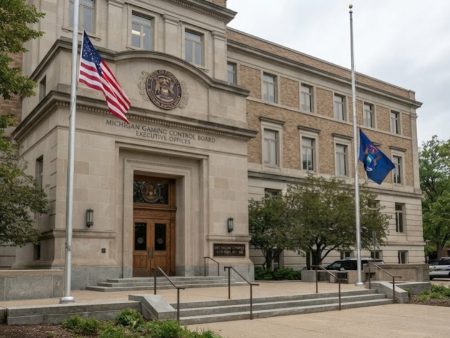
The Michigan Gaming Control Board (MGCB) regulates everything. Fifteen operators hold licenses — each of the three Detroit commercial casinos and twelve federally recognized tribes can partner with one online sportsbook brand. The operator tax rate on adjusted gross sports betting receipts sits at 8.4%, with Detroit casinos kicking in an extra 1.25% city tax.
One thing worth knowing: this almost didn’t happen. Rep. Iden pushed similar bills in 2017 and 2018, but then-Governor Rick Snyder vetoed them. Whitmer’s signature in December 2019 was a long time coming. I read the 14-page bill text when it dropped. It’s surprisingly straightforward — no buried poison pills, no weird restrictions on bet types. Michigan got this one mostly right.
What Are the Best Online Sportsbooks for Michigan Players?
Michigan has 15 licensed online sportsbook operators. The big names you’ll see advertised are the usual suspects — the ones spending millions on TV commercials during Lions games. They’re all regulated and they all pay out. No argument there.
But we’ve been tracking offshore sportsbooks through the entire 2025 NFL season and into 2026, and there are real reasons Michigan bettors keep accounts at these books too. Better odds on props. No limit slashing. Crypto payouts that hit in hours, not days. And bonuses that don’t come with 47 pages of fine print.
Here’s where we’d put our money:
- Bovada has been our go-to for years. The interface is clean, the lines are sharp, and Bitcoin cashouts land same day.
- BetOnline crushes it for live in-game betting. Their odds update faster than most licensed MI books during NFL Sundays. Not even close.
- MyBookie is where the prop degenerates live. Player props, game props, weird props you didn’t know existed. They run some of the fattest welcome bonuses in the offshore space.
- BetUS is solid for the bettor who wants to call someone and talk about their picks. Seriously. They still have phone support and dedicated account managers. Old school in the best way.
- Everygame fills the gap if you’re betting international soccer, tennis, or F1 alongside your Lions and Tigers action. Their European sports coverage is deeper than anything available through Michigan’s licensed operators.
Look — the licensed books are fine for casual bettors. But if you’ve ever had an account limited or a withdrawal held up for “verification” that takes two weeks, you understand why offshore books still have a massive Michigan customer base.
What Michigan Sports Betting Apps Are Available?
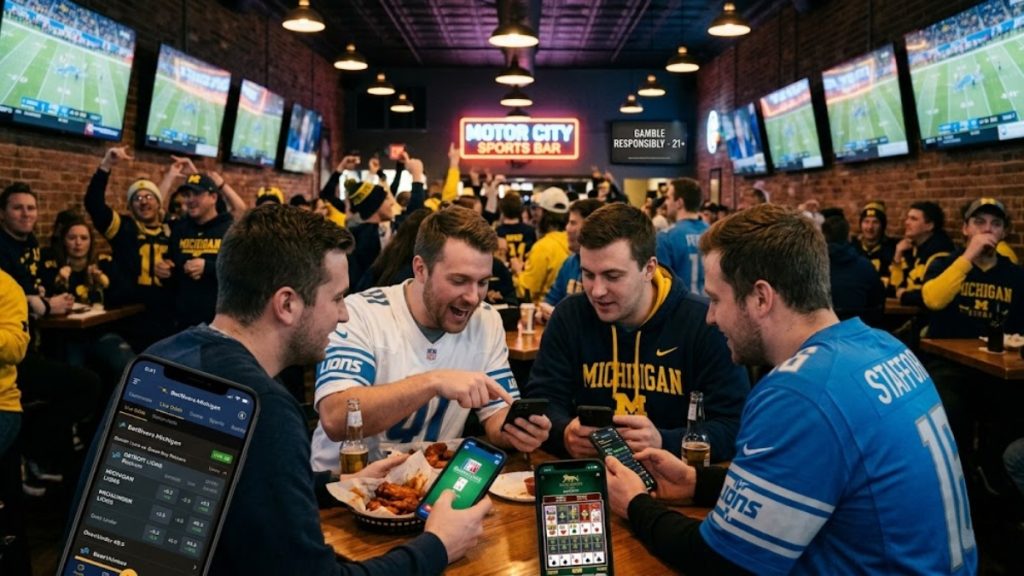
Michigan’s mobile sports betting market is stacked. Fifteen apps are live, each tethered to one of the state’s casino operators — either a Detroit commercial casino or a tribal casino.
The sign-up process is the same across all of them. Download the app, create an account, verify your identity (driver’s license or state ID), confirm you’re physically in Michigan via geolocation, and fund your account. Takes about five minutes if your info matches cleanly.
But we need to be real about something. Several of these apps are fine for placing a bet. Not all of them are fine for winning long-term. We talked to a sharp in Grand Rapids last fall who got limited on three different licensed Michigan apps within six months. His crime? Hitting 58% on NFL sides. That’s it.
The offshore apps we recommend — Bovada and BetOnline in particular — work on mobile browsers without a dedicated app download. You bookmark the mobile site, log in, and bet. No geolocation restrictions beyond the initial signup. No limit-slashing algorithms watching your win rate.
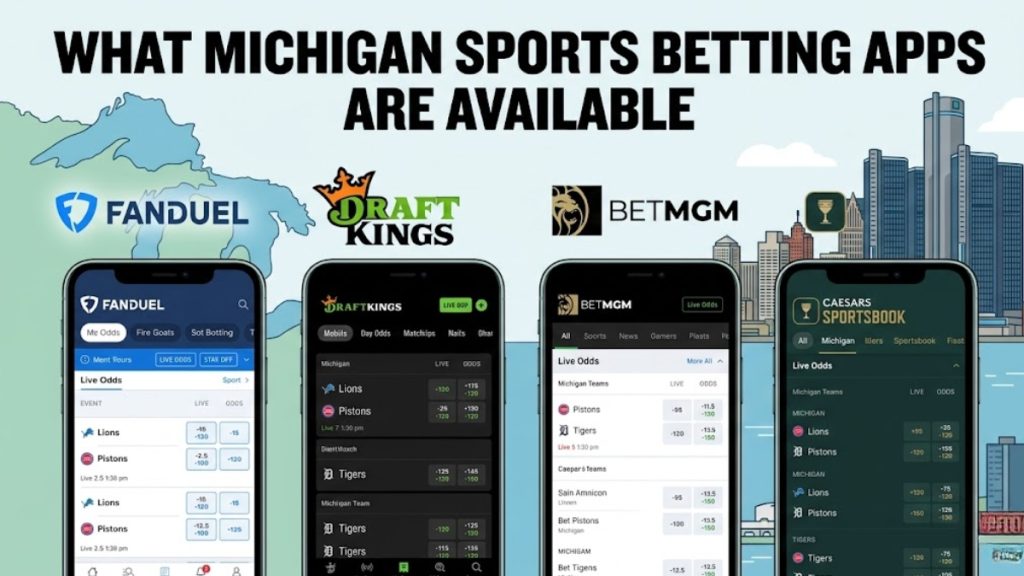
For bettors who just want something quick and regulated, the licensed apps work. For anyone serious about this, keep an offshore account active too. That’s the play.
Michigan Gambling Laws: What Do You Need to Know?
Michigan’s gambling law framework rests on two pieces of legislation signed in December 2019:
The Lawful Sports Betting Act (PA 149 of 2019) — Authorizes sports betting at commercial and tribal casinos, both retail and online. One internet sportsbook brand per operator. The MGCB regulates compliance, including age verification (21+), geolocation, and responsible gaming database checks.
The Lawful Internet Gaming Act (PA 152 of 2019) — Authorizes online casino games and poker. Each casino operator can run two online brands — one for poker, one for casino games — or combine them under one brand. This created the potential for up to 30 online casino/poker sites statewide.
Here’s the full legal status breakdown:
Minimum betting age: 21 for all casino gambling and sports betting. 18 for lottery tickets and horse racing.
Gambling taxes on your winnings: Michigan charges a flat 4.25% state income tax on gambling winnings. If you win $300 or more, the casino must withhold that 4.25% before paying you. Federal withholding kicks in at 24% on winnings exceeding $5,000. Starting January 1, 2026, Michigan taxpayers can only deduct 90% of their gambling losses — down from the previous 100%. That change stings.
The MGCB is the regulatory body. They publish monthly revenue reports, oversee operator licensing, and manage the responsible gaming database. Their compliance enforcement is no joke — they’ve fined operators for geolocation failures and underage access attempts.
Where Are the Land-Based Casinos and Retail Sportsbooks in Michigan?
Michigan has three commercial casinos, all in Detroit, plus 23 tribal casinos spread across the state. I’ve been to two of the three Detroit properties and a handful of the tribal spots. The Detroit casinos feel like proper Vegas-lite venues. The tribal casinos range from massive resort complexes to smaller gaming halls.
Detroit Commercial Casinos
- MGM Grand Detroit — The biggest of the three. Full-scale sportsbook with a wall of screens, table games, slots, poker room. The sportsbook lounge is legit — I watched a Monday Night Football game there in 2023 and the energy was electric. They partner with BetMGM for their online brand.
- MotorCity Casino Hotel — Solid mid-range property. Partners with FanDuel for online. Good restaurant options. The sportsbook is smaller than MGM’s but the seats are more comfortable. Real talk.
- Greektown Casino-Hotel — The most compact of the three. Located right in Greektown, which means you can grab a coney dog after a bad beat. Partners with Hollywood Casino online. It’s got character.
All three Detroit casinos pay an 18% wagering tax on slot and table game revenue, plus the 8.4% sports betting tax with a 1.25% city surcharge.
Notable Tribal Casinos
- FireKeepers Casino Hotel (Battle Creek) — Run by the Nottawaseppi Huron Band of Potawatomi. One of the best-run tribal casinos in the Midwest. Great poker room.
- Soaring Eagle Casino & Resort (Mt. Pleasant) — Saginaw Chippewa Indian Tribe. Massive property with a concert venue that books real headliners.
- Four Winds Casino (New Buffalo, Dowagiac, Hartford, South Bend) — Pokagon Band of Potawatomi. The New Buffalo location near the Indiana border is popular with Chicago-area visitors.
- Gun Lake Casino (Wayland) — Match-E-Be-Nash-She-Wish Band of Pottawatomi. Partners with betParx for online. Recently expanded.
- Kewadin Casinos (five locations across the UP) — Sault Ste. Marie Tribe of Chippewa Indians. If you’re anywhere in the Upper Peninsula, there’s probably a Kewadin within driving distance.
- Bay Mills Resort & Casino (Brimley) — Bay Mills Indian Community. They opened a brand new facility in January 2026. Partners with DraftKings for online sports betting. DraftKings being attached to a tiny UP tribal casino while generating $1.87 billion in lifetime iGaming revenue is one of the funniest things about Michigan’s gambling market.
How Does Tribal Gaming Work in Michigan?
Michigan has 12 federally recognized Native American tribes, and every single one operates at least one casino. Some run multiple properties. The tribal gaming industry predates the 2019 legalization — tribes have operated Class III gaming under the Indian Gaming Regulatory Act for decades.
What changed in 2019 was the online component. Each tribe gets one sports betting license and can offer online casino and poker statewide through a licensed platform partner. The tribe holds the license; the tech company runs the platform. That’s how you end up with DraftKings operating under the Bay Mills Indian Community license and BetMGM operating under the MGM Grand Detroit (commercial) license.
Tribes pay a 2% revenue share to the state plus additional payments to the Michigan Strategic Fund and Michigan Economic Development Corporation ranging from 1% to 12%. In 2022, tribes remitted $30.8 million in direct taxes and $52.8 million to the MSF and MEDC.
Here’s something most guides skip: tribes had to waive sovereign immunity for certain administrative purposes to participate in the online gambling market. That was contentious. It gave the MGCB and Ingham County Circuit courts limited oversight of tribal online operations. Some tribes weren’t thrilled about it, but the online revenue potential was too large to pass up.
The National Indian Gaming Commission and individual tribal gaming commissions still regulate on-reservation gaming. The MGCB only touches the online component. It’s a dual-regulation system that, honestly, works better than most people expected.
And that’s just sports betting. When you add in iGaming (online casino + poker), Michigan’s total online gambling revenue hit $3.3 billion in 2025. Lifetime iGaming revenue has crossed $11.3 billion, generating $2.9 billion in state and local taxes since launch.
FanDuel (via MotorCity) and BetMGM (via MGM Grand Detroit) dominate market share, combining for roughly 45% of iGaming revenue. DraftKings (via Bay Mills) takes the third spot.
These numbers keep climbing. April 2026 online casino revenue was $303.4 million — a 22.3% year-over-year increase. March 2026 set a new monthly record at $322 million. The trajectory shows no sign of flattening.
For comparison, Ohio hit $1.5 billion in sports betting handle in its early months — impressive, but Michigan’s market has deeper product offerings and years of momentum behind it.
What Are the Latest Michigan Gambling News and Legislative Updates?
The biggest story in Michigan gambling right now isn’t a new law — it’s a tax fight.
- Governor Whitmer’s Tax Proposal: In her 2026 budget proposal, Whitmer floated a per-wager tax on sports betting — 25 cents per wager for the first 20 million wagers per year and 50 cents per wager after that. The industry went ballistic. Operators argued it would crush promotional spending and drive bettors to illegal offshore markets. The irony of that argument isn’t lost on us.
- Federal W-2G Threshold Change: Starting in 2026, the federal reporting threshold for gambling winnings dropped to $2,000. That means your sportsbook has to generate a W-2G for any qualifying win above that mark. More paperwork for you, more data for the IRS.
- Loss Deduction Cap: Michigan now only allows deduction of 90% of gambling losses on state taxes, down from 100%. If you’re a volume bettor, that adds up fast.
- bet365 Casino Launch: bet365 entered the Michigan online casino market in April 2026, partnering with the Little Traverse Bay Bands of Odawa Indians. That makes 15 active iGaming operators.
- Bay Mills Casino Grand Opening: The Bay Mills Indian Community opened a brand new casino resort in January 2026 after years of planning. This is the tribal partner for DraftKings’ Michigan operations.
No major new legislation is pending to change the core sports betting framework. Michigan’s laws are mature. The action is all on the tax and regulatory side now.
How Do You Start Betting Online in Michigan?
Dead simple. Five steps.
1. Pick a sportsbook. If you want regulated, download any licensed MI app. If you want offshore flexibility, head to Bovada.lv, BetOnline.ag, or MyBookie.ag from your browser.
2. Create your account. Name, email, date of birth, last four of your SSN (licensed apps only). Offshore books typically only need name, email, and a password.
3. Verify your identity. Licensed apps require a photo of your driver’s license or state ID and will run it against databases. Offshore books generally skip this step until your first withdrawal.
4. Fund your account. Licensed apps accept debit cards, bank transfers, PayPal, Venmo, and sometimes Apple Pay. Offshore books take credit cards, Bitcoin, Ethereum, Litecoin, bank wire, and person-to-person transfers. If you haven’t used crypto for sports betting before, we wrote the full guide.
5. Place your first bet. Start small. Pick a sport you actually follow. Avoid parlays until you understand the vig. And for the love of everything, don’t blow your entire deposit on a 9-leg SGP because a TikTok bettor told you it was a lock.
The whole process — account creation to first bet — takes under 10 minutes on most platforms.
What Payment Methods Can Michigan Players Use?
Payment options depend on whether you’re using a licensed MI sportsbook or an offshore book.
Licensed Michigan Sportsbooks:
- Debit cards (Visa, Mastercard)
- Bank transfer / ACH / eCheck
- PayPal
- Venmo (select apps)
- Play+ prepaid cards
- Cash at cage (for the Detroit casino-linked apps)
Offshore Sportsbooks (Bovada, BetOnline, MyBookie, BetUS, Everygame):
- Bitcoin (BTC)
- Ethereum (ETH)
- Litecoin (LTC)
- Bitcoin Cash (BCH)
- Credit/debit cards (Visa, Mastercard)
- Bank wire
- Person-to-person transfers
- Cashier’s check (withdrawals)
Crypto is the move for offshore. No fees on most deposits. Withdrawals process in 24-48 hours instead of 5-7 business days for checks. We’ve been hammering this point for a while now — if you’re betting offshore and not using crypto, you’re leaving convenience on the table.
Minimum deposits on licensed apps are typically $10-$20. Offshore books usually have $20-$50 minimums depending on the payment method. Maximum deposits are higher on offshore books — some accept $50,000+ crypto deposits without blinking.
How Does Michigan Compare to Neighboring States?
Michigan is the clear leader in the Great Lakes region for online gambling. No contest.
Michigan is one of only seven states with full iGaming — online casino, poker, and sports betting all legal and regulated. Ohio legalized sports betting in January 2023 but hasn’t touched online casino. Indiana has mobile sports betting but no iGaming. Illinois launched sports betting in 2020 with a much higher tax rate.
Wisconsin is still pushing for legalization but tribal opposition keeps killing the bills. Minnesota hasn’t made any real progress.
The tax rate difference matters. Michigan charges 8.4% on sports betting gross revenue. Ohio charges 20%. Illinois uses a progressive scale that tops out around 40% for the biggest operators. Lower tax rates mean operators can offer better odds and more promotions in Michigan — which directly benefits bettors.
Michigan also benefits from having 12 tribes and 3 commercial casinos creating a 15-operator market. More competition means better lines and more bonuses. Ohio launched with fewer operators and higher taxes.
What Responsible Gambling Resources Are Available in Michigan?
The MGCB runs a self-exclusion program — you can voluntarily ban yourself from all Michigan casinos and online gambling platforms for one year, five years, or life. It’s called the Disassociated Persons List.
Michigan’s responsible gaming database is integrated into every licensed app. If you self-exclude, the apps are required to block your account. The system actually works — we’ve heard from readers who tested it.
Michigan Problem Gambling Helpline: 1-800-270-7117
National Council on Problem Gambling: 1-800-522-4700 (call or text)
Michigan Association on Problem Gambling: michigangaming.com has resources specific to MI residents
The Lawful Internet Gaming Act mandates that $500,000 annually from the Internet Gaming Fund goes directly to the compulsive gambling prevention fund. That’s real money earmarked specifically for treatment and awareness.
If betting stops being fun, stop betting. Not a preachy lecture — just common sense. These resources exist because they’re needed. Use them or share them with someone who might.
Final Thoughts from the Rail
Michigan got sports betting and iGaming right. The legislative framework is clean, the market is competitive with 15 operators, and the revenue numbers speak for themselves — $11.3 billion lifetime in online gambling revenue generating almost $3 billion in taxes. That’s real money flowing to schools, first responders, and state services.
But the licensed market isn’t the only game. Offshore books like Bovada, BetOnline, MyBookie, BetUS, and Everygame fill real gaps — no limit slashing, faster crypto payouts, better prop selection, and zero promo restrictions. If you’re a serious bettor in Michigan, having accounts on both sides gives you the best lines and the most flexibility.
We’ll keep watching Whitmer’s per-wager tax proposal. If it passes, expect operators to pull back on promotions and tighten lines. That would push even more volume offshore. We saw Illinois try something similar and it didn’t end well for the state’s competitive position.
Michigan is a top-five U.S. gambling market and the undisputed king of the Midwest. Whether you’re at MGM Grand Detroit watching a Pistons game, sitting in a deer blind in the UP betting from your phone, or grinding NFL props from your couch in Ann Arbor — the options here are damn good.
Frequently Asked Questions
Yes. Michigan legalized online sports betting through the Lawful Sports Betting Act (PA 149 of 2019). Mobile wagering launched on January 22, 2021. You must be 21+ and physically located in Michigan to place a bet through a licensed app.
21 years old. Period. That applies to all casino gambling, online sports betting, and iGaming. The only exceptions are lottery tickets (18+) and horse racing (18+).
No. Michigan’s legal gambling age for sports betting is 21. There are no exceptions, regardless of whether you’re at a retail casino or using an online app.
Fifteen licensed operators run apps in Michigan, each partnered with a commercial or tribal casino. The market includes brands like BetMGM, FanDuel, DraftKings, Caesars, Hard Rock Bet, Fanatics, BetRivers, bet365, and more. Offshore books like Bovada and BetOnline also serve Michigan residents through mobile-optimized websites.
Michigan doesn’t have laws that criminalize individual bettors for using offshore sportsbooks. The state regulates licensed operators, not individual users. Millions of Americans, including Michigan residents, maintain offshore sportsbook accounts alongside their licensed app accounts.
Michigan’s online sports betting handle for 2025 totaled approximately $5.4 billion, generating $435.9 million in gross revenue. That’s about $534 per Michigan resident wagered on sports online during the year.
Operators pay 8.4% on adjusted gross sports betting receipts. Detroit casinos pay an additional 1.25% city tax. For personal winnings, Michigan charges a flat 4.25% state income tax on gambling income, withheld at the source for wins of $300 or more.
Yes. Michigan is one of only seven states with legal, regulated online casino gambling (iGaming). Online slots, table games, and poker have been legal since January 2021 under the Lawful Internet Gaming Act.
The fastest method is cryptocurrency. Bitcoin, Ethereum, and Litecoin withdrawals from Bovada, BetOnline, and MyBookie typically process within 24-48 hours. Check or bank wire withdrawals take 5-10 business days. There are no state-level restrictions on receiving offshore payouts.
Governor Gretchen Whitmer signed the Lawful Sports Betting Act on December 20, 2019. Retail sportsbooks at Detroit’s three commercial casinos opened in March 2020. Online/mobile betting launched statewide on January 22, 2021.
Wins over $300 trigger a 4.25% Michigan state tax withholding. Wins over $5,000 trigger a 24% federal withholding. Starting in 2026, the W-2G reporting threshold dropped to $2,000. You must report all gambling income on your tax return regardless of amount — and starting in 2026, you can only deduct 90% of your losses.
Michigan is the best state for online gambling in the Midwest. Lower operator tax rates (8.4% vs Ohio’s 20%) mean better odds and promotions. Michigan also has full iGaming — online casino and poker — which Ohio and Indiana lack entirely.
📂 Explore more: Michigan