
Quick answer: A prediction market lets you buy a yes or no contract that pays $1 if an event happens and $0 if it does not. A sportsbook sets odds and you bet against the book. Prediction markets are run as exchanges, where you trade with other users and pay a fee. Whether sports contracts can be offered in your state is being fought in court right now, and the answer differs by region.
Last checked: October 21, 2026. Sources: CFTC, Kalshi, Polymarket US, Reuters, Politico and a DLA Piper legal update, all linked below. This is information, not legal advice. Laws and court rulings are changing fast.
What is a prediction market?
A prediction market is a place to trade on the outcome of a future event. The U.S. CFTC calls these products event contracts. They are usually yes-or-no questions with a fixed payout, often $1, and an end date.
The CFTC gives a simple example. Say a contract asks whether it will rain tomorrow and the yes price is 70 cents. If you buy yes and it rains, you collect $1 and earn 30 cents. If it does not rain, you lose the 70 cents. The CFTC adds that taxes and fees can also change your return.

The price works like a rough probability. A contract trading at 70 cents says the crowd thinks there is about a 70 percent chance. That is a guess made by traders, not a promise.
How is that different from a sportsbook?
At a sportsbook you bet against the house. The book sets the line and takes a built-in margin. On a prediction market the platform matches buyers and sellers. The CFTC says regulated exchanges do not take the other side of your trade.
| Sportsbook | Prediction market | |
|---|---|---|
| Who is on the other side? | The sportsbook | Another trader on the exchange |
| How is the price shown? | American odds, like -110 or +150 | Cents from 1 to 99 per $1 contract |
| How does the platform earn money? | Margin built into the odds | A trading fee, per its fee schedule |
| What can you lose? | Your stake | The price you paid for the contract |
| Can you sell before the event ends? | Sometimes, as a cash-out offer | Usually yes, at the current market price, if there is a buyer |
| Who regulates it? | State gaming regulators | The CFTC says it has authority. Some states disagree. |
Sources: CFTC explainer; Kalshi and Polymarket US fee schedules; Reuters and DLA Piper court coverage. Checked October 21, 2026.
Worked example (made-up numbers). A contract trades at 55 cents. That is the same as roughly -122 in American odds, because you risk 55 cents to win 45 cents. If you buy 100 contracts, you pay $55 and get $100 back if you are right. On Kalshi, its published table lists a fee of about $1.74 for 100 contracts at 55 cents. Your profit would then be about $43.26, before taxes. If you are wrong, you lose the $55 plus the fee.
What do the fees look like?
Each platform sets its own fees, and they can change. The Kalshi fee schedule says Kalshi’s general trading fee is 7 percent of price times the chance of loss, charged on each contract. In plain terms, the fee is biggest near 50 cents and smaller near 1 cent or 99 cents. Kalshi lists no settlement fee, no membership fee and no fee on ACH bank deposits or withdrawals. It also points to a page of upcoming fee changes, so check it before you trade.
The Polymarket US fee schedule lists a standard taker fee that tops out at $1.74 per 100 contracts at 50 cents. It says the schedule took effect October 19, 2026. Makers who rest orders on the book can earn rebates at high volume tiers.
Who can use prediction markets, and where?
The CFTC says regulated prediction markets are federally regulated and can operate in all 50 states under federal law. Many states do not agree, at least for sports contracts. Each platform also sets its own sign-up rules, including age and ID checks, so read the platform’s own terms. Sportsbooks require 21 in most states. Do not assume a prediction market follows the same rule.
Polymarket’s international site says it blocks trading from the United States and points U.S. users to its separate U.S. exchange, Polymarket US, which the CFTC lists under the assumed name of QCX LLC. Check which site you are on.

Are sports prediction markets legal?
It depends on which court you ask. This is the state of play on October 21, 2026, based on news and legal reports.
- April 6, 2026: the 3rd U.S. Circuit Court of Appeals ruled 2 to 1 that New Jersey cannot stop Kalshi’s sports contracts. The court said the CFTC has exclusive authority. Reuters
- August 28, 2026: the 9th Circuit ruled 3 to 0 the other way in a Nevada case. It said sports event contracts are not swaps under federal law and that federal law does not block Nevada’s gambling rules. DLA Piper
- September 25, 2026: the 6th Circuit ruled that Ohio and Tennessee can regulate Kalshi’s contracts under their gambling laws. Reuters
- October 2026: New Jersey has asked the U.S. Supreme Court to take its case. A group of 39 states and Washington, D.C. filed a brief on October 7 urging the court to take it. Whether the justices will hear it was not known when we checked. Politico
There is also a federal track. In March 2026, CFTC staff issued an advisory on prediction markets. On June 10, 2026, the CFTC proposed a rule that would define “gaming” and set a test for which event contracts are allowed. The comment period closed July 27, 2026. DLA Piper reports that 44 states sent a joint letter disputing the CFTC’s authority over sports contracts.
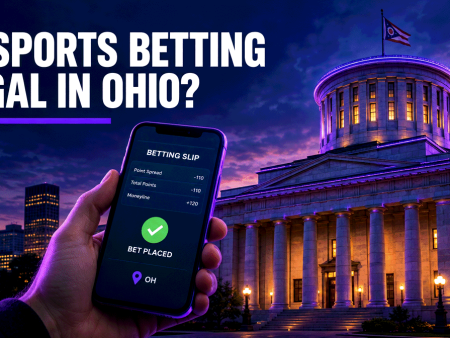
What does that mean for you? The rules depend on where you live and could change quickly. For two state-level examples, see our guides to Arizona and Ohio. We cannot tell you what is legal where you live. Check your state gaming regulator or ask a lawyer.
What are the risks?
- You can lose everything you pay for a contract.
- Fees and taxes reduce what you keep. The CFTC says to understand how fees affect returns over time.
- A market can take time to settle. Kalshi says most settle within a few hours, but some wait on official data.
- Rules can change mid-season if a court rules or a state acts.
- The CFTC warns that you may have little or no protection with unregistered offshore sites. Trade only with registered entities.
If gambling is causing problems, call 1-800-MY-RESET (1-800-522-4700). You must be 21 or older to use sportsbooks in most states. Never risk money you need for bills.
Quick answers
Is a prediction market the same as a sportsbook? No. A sportsbook takes your bet. A prediction market matches you with another trader and charges a fee.
What does a 60-cent contract mean? You pay 60 cents and get $1 if you are right, so your best-case profit is 40 cents before fees.
Is Kalshi legal in every state? The CFTC says federal law lets it operate in all 50 states. Courts have split, and several states are fighting it, so check where you live.
Do prediction markets charge fees? Yes. Kalshi and Polymarket US both publish fee schedules, listed in the sources below.
Sources
- CFTC: Understanding Prediction Markets and Event Contracts (checked October 21, 2026)
- Kalshi fee schedule and Kalshi settlement FAQ (October 21, 2026)
- Polymarket US fee schedule (October 21, 2026)
- CFTC staff advisory, Letter No. 26-08 (March 12, 2026)
- DLA Piper litigation update (September 2, 2026)
This guide has no affiliate links. 21+ for sportsbooks. Prediction markets set their own rules. Gambling involves risk. Last checked October 21, 2026.