
Mississippi Online Sports Betting continues to face challenges in becoming legal, and the state will not have legal mobile sports betting in 2026. For the third consecutive year, the state House overwhelmingly passed online sports betting bills — and the Senate killed both before they ever got a floor vote. One senator, David Blount (D-Jackson), chairs the Senate Gaming Committee and has single-handedly blocked mobile wagering three years running.
I tracked both bills through committee hearings and watched the votes. The political dynamics aren’t complicated. They’re just frustrating as hell for anyone who wants to bet from their couch instead of driving to Biloxi. That’s why Mississippi online sports betting is such a hot discussion.
What Happened to Mississippi’s Online Sports Betting Bills in 2026?
Two bills made it out of the House with massive bipartisan support. Neither survived the Senate Gaming Committee, showing how progress on sports betting in Mississippi (especially online) keeps hitting roadblocks.
- HB 1581 — Rep. Casey Eure’s (R-Saucier) first attempt. Would have let each of the state’s 26 casinos partner with up to two online operators. Revenue earmarked for the Public Employees’ Retirement System. Passed the House 85-31. Died on the March 3 committee deadline when Blount chose not to bring it up.
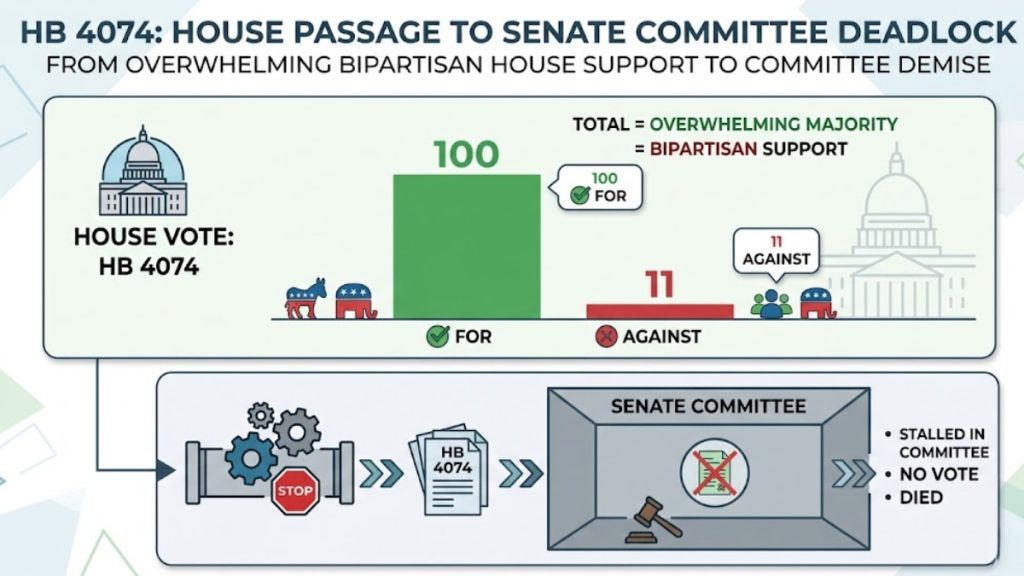
- HB 4074 — Eure’s second swing. An appropriations bill that narrowed it to one operator per casino and cut the casino tax from 8% to 6%. Passed the House 100-11. Near unanimous. Died March 17 when Blount again declined to vote.
Sit with that 100-11 number for a second. In a legislature where people fight about everything, 100 out of 111 voting members said yes. One senator buried it. The appetite for Mississippi internet sports betting is shockingly high in the House, despite ongoing opposition elsewhere.
Why Does One Senator Keep Killing This Bill?
Blount’s stated reasons are financial. HB 4074’s casino tax cut would cost the state approximately $48 million a year, he argued, and mobile betting revenue wouldn’t cover the gap. In an interview with the Clarion Ledger, Blount said: “There was really no meaningful financial benefit to the state from expanding mobile gambling.” However, when considering Mississippi’s efforts to legalize online sports betting, these financial concerns often take center stage.
The math gets messy here. Eure projected $40-60 million in first-year mobile revenue. Blount called that “an exaggeration” and cited Tax Foundation data suggesting $14 million at a 10% tax rate. Even at Eure’s proposed 22% mobile tax rate, you’re looking at roughly $30 million — still short of the $48 million casino tax break.
But this framing ignores something obvious. The casino tax cut isn’t inseparable from mobile expansion. And PERS — Mississippi’s retirement system — is one of the worst-funded in the country with $26 billion in unfunded liabilities. Both House bills directed mobile revenue there specifically.
The real story Blount won’t say out loud: locally-owned Gulf Coast and Tunica casinos don’t want mobile betting because it threatens foot traffic. Period. Casino operators opposing expansion had 55% of their properties in Mississippi. Those supporting mobile? Only 22% of their portfolios in-state. The casinos with the most to lose fought hardest against a changing Mississippi online sports betting environment.
How Are Neighboring States Eating Mississippi’s Revenue?
Every bordering state with a real sports betting market has already gone mobile. And they’re cleaning Mississippi’s clock. Observers point out again and again that online sports betting in Mississippi lags while competitors rake in revenue.
Louisiana launched mobile in January 2022. Monthly handle regularly clears $200 million. Tennessee went mobile in November 2020, hitting $215 million monthly before reaching maturity. Arkansas has mobile wagering through Betly and other operators.
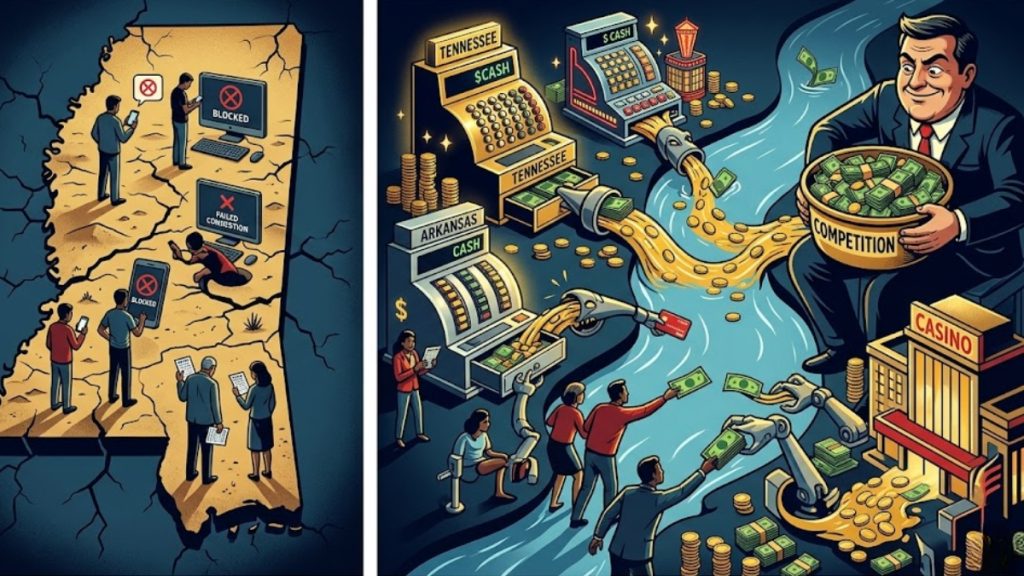
Mississippi’s retail-only handle has actually declined since neighbors went mobile, per Mississippi Business Journal reporting. No surprise there. A bettor in Tupelo isn’t driving four hours to Tunica when they can cross into Tennessee and bet from their phone — or use an offshore book from the couch. The lack of regulated Mississippi online sports betting means a lot of state dollars disappear elsewhere.
Eure estimated Mississippi loses between $32 million and $64 million annually in tax revenue. That money isn’t vanishing. It’s going to Louisiana, Tennessee, and offshore sportsbooks, all because Mississippi failed to adopt full online sports betting options.
What Can Mississippi Bettors Actually Do Right Now?
Mississippi bettors who want mobile wagering have two options: drive to a neighboring state or use an offshore sportsbook, since legal Mississippi online sports betting isn’t available yet for residents in 2026.
Bovada and BetOnline have served Mississippi bettors for years. Bovada’s mobile app handles NFL, NBA, and MLB betting well — the live betting interface is solid for a state that gets zero legal mobile options. BetOnline is a strong pick if you want crypto payouts that typically clear inside 24 hours. Until lawmakers change their minds on Mississippi sports betting, these are the main choices for online action.
University of Mississippi research found nearly 60% of college students in the state who placed bets did so online. Since the 2025 NFL season, Mississippi recorded 8.69 million attempts to access legal mobile sportsbooks — all hitting dead ends because those platforms can’t operate in-state.
People aren’t waiting for the legislature. They’re already betting online. Mississippi just isn’t collecting a dime from it, which demonstrates how the absence of regulated online sports betting in Mississippi is costing the state financially.
For the full state-by-state picture, check our gambling legislation tracker. We cover every active bill on our sports betting news page, and you can browse best betting bonuses if you’re comparing offshore options. Our BetUS review breaks down another offshore alternative worth considering, adding context to the ongoing debate around Mississippi’s online sports betting future.
Frequently Asked Questions
No. Mississippi only allows in-person sports betting at its 26 licensed casinos. Mobile and online wagering remain illegal after two House bills died in the Senate Gaming Committee in March 2026.
The earliest possible date is 2027 when the legislature reconvenes. Rep. Casey Eure has pushed bills three straight years. Until Senate leadership shifts or Blount reverses course, mobile betting stays dead.
Offshore sportsbooks like Bovada and BetOnline accept Mississippi bettors. They operate outside U.S. jurisdiction and aren’t regulated by the Mississippi Gaming Commission — a practical mobile option in a state without legal alternatives, though they carry risks regulated books don’t.
The Gulf Coast casino lobby holds outsized political influence in the state Senate. Locally-owned casinos fear mobile platforms would siphon foot traffic, and they’ve pressured the Senate Gaming Committee chair to block expansion — even when the House passes bills 100-11.
Rep. Eure estimated $32-64 million annually. Louisiana, Tennessee, and Arkansas are capturing bettors who’d otherwise contribute to Mississippi’s tax base, and the state’s retail handle has already shrunk since those neighbors launched mobile platforms.
📂 Explore more: Mississippi