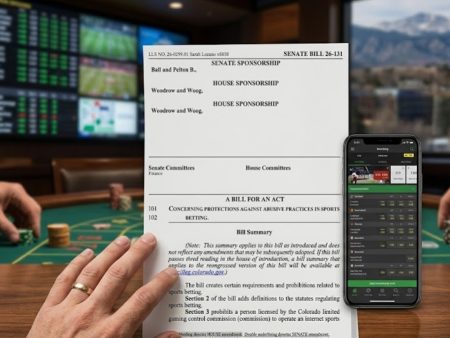

Colorado’s SB26-131 bans credit card deposits on regulated sportsbooks, caps deposits at six per day, and kills “bonus bet” marketing language — and none of it applies to offshore books. Gov. Jared Polis signed the bill on June 2, 2026, with an effective date of August 12. If you bet with Bovada or BetOnline, your life doesn’t change. If you bet exclusively on Colorado-licensed apps, things are about to get annoying.
I tracked this bill from its Senate introduction in February through three committee hearings and a fiscal note that nearly blew the whole thing up. Here’s what survived and why it matters.

What Does SB26-131 Actually Restrict?
SB26-131 is the first state law in the country to ban push notifications from sportsbooks. That’s the headline, but the full restriction list runs deeper:
- Credit card deposits banned. No regulated Colorado sportsbook can accept credit cards after August 12. Debit, bank transfer, crypto where offered — those stay.
- Six deposits per 24 hours. In-play bettors who reload three, four, five times during an NFL Sunday are about to hit a ceiling.
- “Bonus bet” and “no sweat” language prohibited. Regulated books can still run promos. They just can’t call them that.
- No push notifications. Those “Live bet now!” phone alerts? Gone.
- No ad targeting under-21. Self-explanatory.
The Colorado Gaming Control Commission can levy penalties up to $25,000 per violation. Real enforcement teeth, not just a suggestion.
Sen. Matt Ball called it guardrails for an industry “that has ballooned in Colorado to more than $6 billion in annual wagers in just a few years.” Fair point on the growth. Whether capping deposits actually protects anyone is debatable as hell.
Colorado just passed the strongest sports betting consumer protection law in the country. SB26-131 limits daily deposits, bans solicitation push notifications, & prohibits credit card use on gambling apps. Next up: bringing these protections to other states. #SB26131 #copolitics pic.twitter.com/uwVACxjNqp
— Healthier United (@HealthierUnited) May 26, 2026
How Did the Prop Betting Ban Get Killed?
The original SB26-131 draft included a full ban on proposition bets. Same-game parlays, player props — all of it was on the chopping block.
Then the fiscal note landed: $2.4 million in projected annual tax revenue loss. Dead on arrival. Legislators stripped the prop ban in committee. The credit card restriction survived despite its own $800K revenue hit because the math was easier to stomach. I’ve watched this exact pattern play out in Ohio and Massachusetts — big consumer protection bills get trimmed once somebody calculates the actual cost.
Can You Still Use Credit Cards on Offshore Sportsbooks in Colorado?
Yes. SB26-131 only applies to sportsbooks licensed by the Colorado Gaming Control Commission. Bovada, BetOnline, and MyBookie operate outside that jurisdiction. Credit cards still work. No deposit caps. No push notification bans. And no restrictions on promotional language.
That’s the angle nobody else is covering. Every outlet I’ve read frames this as a consumer protection win — and maybe it is for problem gamblers. But the practical effect? Regulated books just got harder to use. Offshore books didn’t.

We saw the same dynamic after Ohio’s credit card ban earlier this year. When states tighten rules on licensed operators, the gap between regulated and offshore experiences gets wider. Also, for bettors who already have a crypto betting setup, none of this is disruptive. For credit card bettors locked into regulated apps, it’s a pain in the ass.
How Does Colorado Stack Up Against Other States?
Colorado is now the most restrictive legal sports betting state in the country by a wide margin. And the trend isn’t slowing — Pennsylvania announced a bipartisan problem gambling bill package on June 3 from Reps. Khan and Flick. More states will follow.
What Should Colorado Bettors Do Before August 12?
Switch off credit cards now. Start using debit or bank transfers on regulated accounts before the deadline so the transition isn’t a scramble. Or set up Bitcoin deposits at an offshore book where none of these restrictions apply — MyBookie is a solid starting point for bettors making that move.
If you rarely reload more than six times a day, the deposit cap won’t touch you. But active in-play bettors should track their patterns now. Getting locked out during a live NFL slate because you hit an arbitrary cap is brutal — and entirely avoidable if you’ve got an offshore backup in place.
Colorado handles $6 billion-plus in annual wagers. The state just made its regulated side meaningfully less convenient. Whether bettors adjust their habits or move to offshore alternatives is the question everyone in the Colorado betting market should be asking right now.
Frequently Asked Questions
1. When does the Colorado credit card ban take effect?
August 12, 2026. After that date, no state-licensed sportsbook can process credit card deposits. Debit cards, bank transfers, and crypto remain available.
2. Do Colorado’s new restrictions apply to offshore sportsbooks?
No. SB26-131 governs sportsbooks licensed by the Colorado Gaming Control Commission. Offshore operators like Bovada and BetOnline are not affected.
3. What happened to the prop betting ban in SB26-131?
Removed in committee after a fiscal analysis projected $2.4 million in annual tax revenue loss. The signed law does not restrict proposition bets.
4. Can Colorado bettors get in trouble for using offshore sportsbooks?
Colorado law targets operators, not individual bettors. There are no provisions penalizing residents for placing bets on offshore platforms.
📂 Explore more: Colorado