

Ohio House Bill 971 — the Save Ohio Sports Act — would kill mobile sports betting across the entire state, and if it passes, Ohio becomes the first state in America to repeal legal online wagering since PASPA fell in 2018. The bill was filed July 1, 2026, introduced formally on July 2, and sponsored by Reps. Jonathan Newman and Beth Lear, both Republicans, with 10 GOP cosponsors backing the effort.
The Quick Version
- HB 971 bans ALL online and mobile sports betting in Ohio. Mobile wagers would only be allowed inside casino walls via geofencing.
- Parlays, prop bets, in-game betting, and college sports wagers would all be eliminated under the bill.
- A $100 maximum bet cap and an 8-wager-per-day limit would apply to remaining retail bettors.
- Ohio has collected roughly $600 million in sports betting taxes since its January 2023 launch — the vast majority from online bets.
- The bill has NOT been assigned to a committee yet as of July 6, 2026, which matters for timeline predictions.
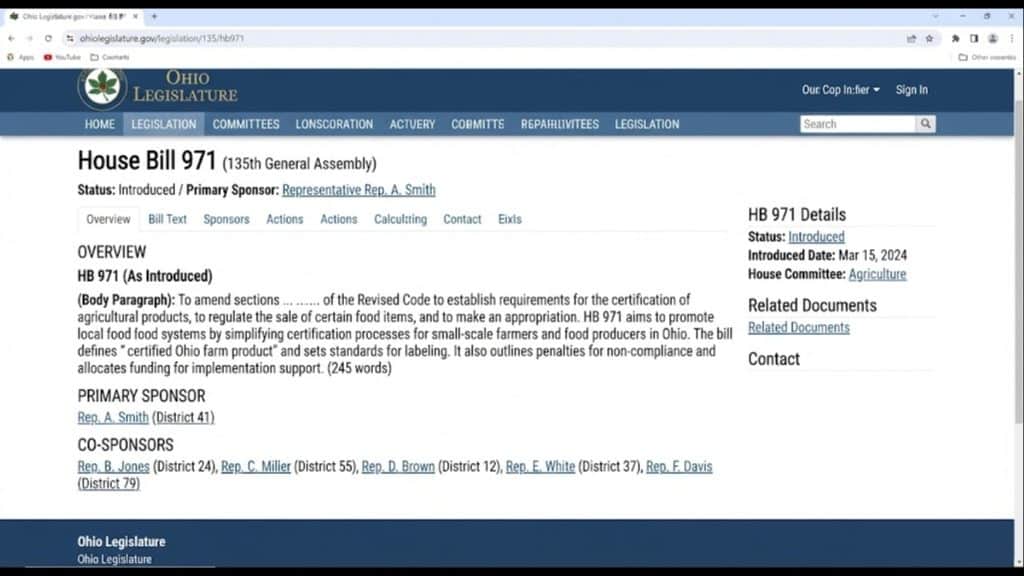
What Does Ohio’s Save Ohio Sports Act Actually Ban?
HB 971 isn’t a tweak or a reform. It’s a wrecking ball. Here’s the full list of what Rep. Newman and Rep. Lear want to eliminate, per the bill text filed with Ohio’s 136th General Assembly:
- All statewide online and mobile sports betting — geofenced to casino premises only
- Prop bets on individual athletes — gone entirely
- All college sports betting — Ohio already axed college player props in February 2024, but this kills college wagers completely
- In-game and live betting — no more mid-game action
- Parlays — banned outright
- Bets over $100 — hard cap per wager
- More than 8 bets in 24 hours — per bettor limit
- Gambling ads during live sporting events and at college venues — full advertising ban in those contexts
- Credit card funding for betting accounts — which the Ohio Casino Control Commission was already moving toward separately (see Ohio’s credit card crackdown)
- All betting except in-person at licensed Ohio casinos — retail survives, barely
That’s not a regulation bill. That’s a repeal bill wearing a trenchcoat.
Rep. Newman said it plainly in his statement: “Monetizing addiction to fund public education is the wrong direction for Ohio. Who wins when predatory gambling preys on the vulnerable? It’s not our schools; that’s for sure! It’s the trillion-dollar big gambling companies who win. How is this good for Ohio?”
I’ve tracked dozens of state bills through committee over the past three years, and the rhetoric is familiar. But the scope of this one? Unprecedented.
How Much Tax Revenue Would Ohio Lose?
Ohio stands to torch roughly $600 million in accumulated sports betting tax revenue — and counting — if HB 971 passes. The overwhelming majority of that money came from mobile and online betting, not retail windows at the four licensed casinos.
Here’s the math that nobody in Columbus seems to want to talk about: Ohio’s retail sportsbook handle is a fraction of its mobile volume. Nationally, mobile wagering accounts for 85-90% of total sports betting handle in states that offer both channels, per the American Gaming Association’s 2025 data. Ohio tracks right along those numbers.
So when Newman frames this as protecting education funding from “predatory gambling,” he’s actually proposing to eliminate the revenue stream that feeds education funding. The irony is genuinely painful.
Maryland tried something similar in 2025 with SB 1033 — a near-identical repeal attempt. It didn’t even survive its first Senate reading. Dead on arrival. But Maryland’s bill didn’t have the emotional catalyst that Ohio’s does.
The bill’s bottom line: Ohio would forfeit hundreds of millions in annual tax revenue while pushing bettors toward unregulated alternatives.
Why Did This Bill Surface Now?
The Cleveland Guardians scandal lit this fuse. Pitchers Emmanuel Clase and Luis Ortiz were accused of manipulating pitches for gambling kickbacks — a genuine match-fixing allegation involving one of Ohio’s own MLB franchises.
That gave legislators the cover they needed. Gov. Mike DeWine, a Republican who’s term-limited and leaving office in January 2027, told the Associated Press in November 2025 that he “regrets” signing the sports betting legalization bill. He doubled down with Cleveland.com in January 2026, calling it his “biggest regret.”
When the sitting governor publicly disowns his own legislation, ambitious House members smell opportunity. Newman and Lear seized it.
But here’s a detail that tells you more about this bill’s actual chances than any floor speech: two of the original announcement cosponsors — Reps. Gary Click and Riordan McClain — aren’t actually on the bill. Click’s office said he “no longer has bandwidth.” McClain said he “didn’t know they were going to introduce it this early.”
Cosponsors bailing before the damn thing even gets a committee assignment? That’s not a great sign for momentum.
Does HB 971 Have Any Real Chance of Passing?
Probably not — but “probably not” isn’t the same as “definitely not,” and I’ve watched enough state legislatures to know that bad bills sometimes find a way. HB 971 hasn’t been assigned to a House committee as of July 6, 2026. No committee assignment means no hearing schedule, no testimony, no vote timeline. It’s stuck in legislative purgatory.
Ten cosponsors sounds like support until you realize the Ohio House has 99 members. That’s roughly 10% of the chamber. You need a majority to move anything. The gambling industry lobby in Ohio is well-funded, operators are entrenched, and $600 million in tax receipts buys a lot of political goodwill.
Compare that to Maryland’s SB 1033 from 2025, which tried the same repeal play and couldn’t even clear a single committee reading. No state has successfully repealed legalized online sports betting since PASPA was overturned in 2018. Ohio would be writing history — and most legislators don’t want their name on that particular page.
My honest read after tracking this through two weeks of committee noise and sponsor drama: HB 971 is more protest than policy. It makes headlines, gives Newman a talking point about gambling addiction, and then quietly stalls. But if the Guardians scandal produces federal indictments? The political calculus shifts fast.
The realistic assessment: this bill dies in committee, but the conversation it started isn’t going away.
What Happens to Ohio Bettors if Mobile Betting Gets Banned?
If the nightmare scenario plays out and Ohio somehow passes HB 971, every bettor who wagers from their couch, their car, or their buddy’s basement is out of luck — at least through legal state-regulated channels. Your options shrink to driving to one of Ohio’s four licensed casinos, standing in line at a retail window, and placing a maximum of eight bets capped at $100 each.
No parlays. No props. And no live betting. No college sports. For anyone who’s been betting in Ohio since the January 2023 launch, that’s not a minor inconvenience. That’s the entire experience gutted.
Which is exactly why offshore sportsbooks become the conversation. Bovada, BetOnline, and MyBookie already serve Ohio bettors and have been doing so for years. None of HB 971’s restrictions apply to offshore platforms — no bet caps, no parlay bans, no prop restrictions, no college betting bans, no absurd 8-bet daily limit.
We covered the earlier version of this bill and what it means for mobile wagering in our breakdown of Ohio’s proposed mobile wager ban. The offshore angle hasn’t changed since then — if anything, HB 971 makes it more relevant.
Which Offshore Sportsbooks Work for Ohio Bettors Right Now?
Every offshore book that serves US customers currently accepts Ohio bettors with zero restrictions. No geofencing, no bet limits, no parlay bans. Here’s what matters:
That table is the whole argument in four rows. Everything HB 971 wants to ban is standard on every offshore platform. Whether or not this bill passes, Ohio bettors who want the full betting experience already have options.
For a closer look at individual platforms, check our BetUS review and see for yourself whether MyBookie is legit. Both accept crypto deposits and have no wagering restrictions for Ohio players.
What Should Ohio Bettors Do Right Now?
Don’t panic. Seriously. This bill is barely out of the gate and already shedding cosponsors. But being aware of your options isn’t panic — it’s preparation.
If you’re currently betting through a regulated Ohio sportsbook app, nothing changes today. Your account works. Also, your bets settle. Your withdrawals process.
If you want to set up a backup plan, opening an account at an offshore book like Bovada or BetOnline takes about ten minutes, and crypto deposits mean you’re not handing over credit card information to anyone. Given that Ohio’s credit card crackdown was already headed in the no-credit-card direction through the Casino Control Commission, crypto has been the smarter deposit method for months now anyway.
For ongoing updates on this bill and everything else happening in the Buckeye State, bookmark our Ohio betting updates page and our gambling legislation tracker.
I’ll be watching the committee assignment — that’s the next real signal. If HB 971 gets assigned to a friendly committee chair, the conversation changes. If it sits unassigned through the summer recess, it’s dead and everyone knows it.
📂 Explore more: Ohio