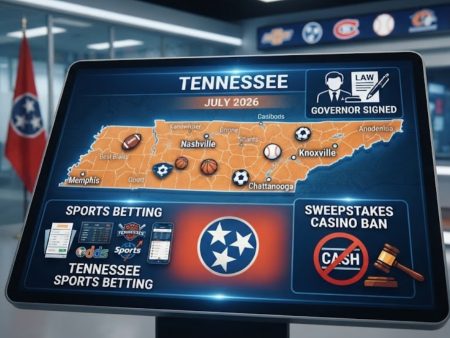

Sports betting is legal in Tennessee — but the state’s 10% mandatory hold requirement means licensed sportsbooks are literally required to keep more of your money than books in any other state. Tennessee launched legal online-only wagering on November 1, 2020 under House Bill 1, and the Sports Wagering Advisory Council (SWAC) currently oversees 12 licensed operators. No retail sportsbooks exist. It’s all mobile, all online.
Here’s what most guides won’t tell you: that 10% hold rule doesn’t exist at offshore sportsbooks. Bovada, BetOnline, MyBookie, and BetUS all serve Tennessee bettors with standard industry vig — meaning better odds on every single bet you place. We’ve been tracking this gap for two years now, and the math isn’t even close.
This is your full breakdown of Tennessee’s gambling scene in 2026 — the legal stuff, the offshore alternatives, the new college campus betting ban, and everything a bettor in Nashville, Memphis, or Knoxville needs to know.
The Quick Version
- Tennessee legalized sports betting in 2019 (HB 1) and launched online-only wagering November 1, 2020
- 12 licensed sportsbook apps operate under SWAC, but zero retail locations exist anywhere in the state
- The 10% mandatory hold rule means TN-regulated books offer worse odds than any other legal state
- Offshore sportsbooks like Bovada, BetOnline, and MyBookie offer standard ~5-7% hold with no state-mandated markup
- Tennessee generated $5.84 billion in handle during 2025, per SWAC monthly reports
- A new college campus betting ban (HB 5229) passed in May 2026 — no betting from campus Wi-Fi or within venue geofences
- Tax structure shifted to 1.85% of handle in 2023, moving away from the old 20% GGR model.
Is Sports Betting Legal in Tennessee?
Yes, sports betting is 100% legal in Tennessee, but only through licensed online and mobile platforms. Governor Bill Lee let House Bill 1 become law without his signature on April 30, 2019, making Tennessee one of the first states to legalize without any brick-and-mortar component at all.
That “online-only” piece matters. You can’t walk into a casino in Nashville or Memphis and place a bet at a window. Doesn’t exist. Tennessee has zero commercial casinos and zero retail sportsbooks. Every legal wager runs through an app on your phone or a website on your laptop.
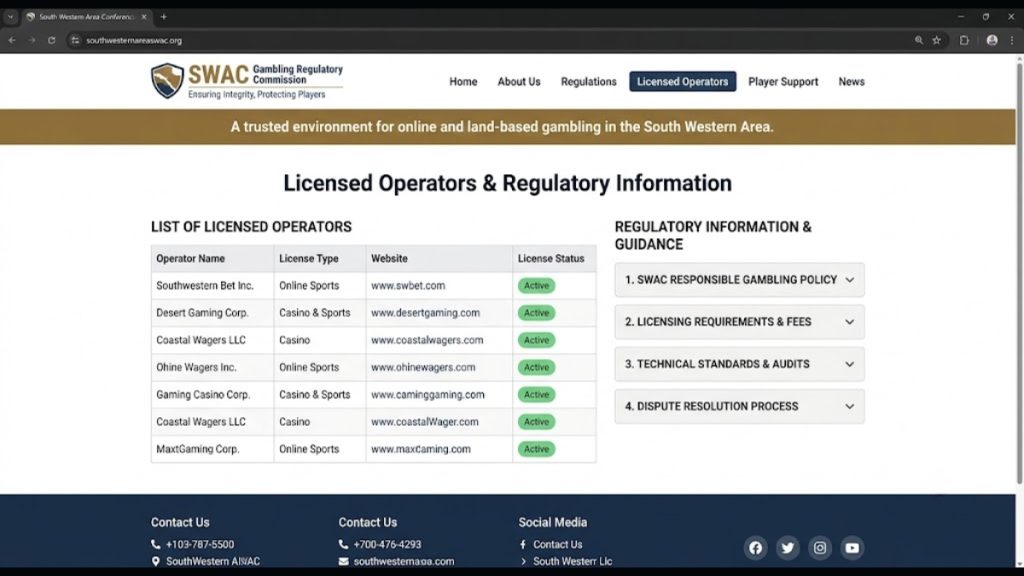
The Sports Wagering Advisory Council — which took over regulation from the Tennessee Education Lottery in 2022 — manages licensing, enforcement, and monthly reporting. You must be 21 or older and physically located inside Tennessee’s borders when you place a bet. Geolocation tech on every app confirms your position.
One thing the SWAC has been aggressive about: going after offshore operators. In April-May 2025, the council slapped $200,000 in combined fines on BUSR, BetUS, MyBookie, and XBet. BetOnline got a cease-and-desist letter the following month. And in October 2025, BetWhale caught another $50K fine. Despite all that enforcement activity, these offshore books continue to serve TN bettors. The SWAC doesn’t have the jurisdictional reach to actually shut them down.
Bottom line: sports betting is legal in Tennessee through licensed mobile apps, but the state’s unique regulations — especially the 10% hold rule — make offshore alternatives a serious consideration for anyone who cares about getting fair odds.
Why Tennessee’s 10% Mandatory Hold Is Costing You Money
This is the section no other Tennessee betting guide writes. And it’s the single most important thing for TN bettors to understand.
Tennessee is the only state in America that forces licensed sportsbooks to hold at least 10% of all wagers on an annual basis. The national average hold rate sits around 7%, and Nevada — where books have operated for decades — runs closer to 5%.
What does that mean in plain English? For every $100 you wager on a regulated Tennessee app, the sportsbook is required by law to keep at least $10. Nationally, that number is $7 or less. Over a year of betting, that difference adds up fast.
We ran the numbers. If you bet $500 per week on Tennessee’s regulated apps at a 10% hold, you’d lose roughly $2,600 per year to the mandatory hold alone. Run that same action through an offshore book holding the industry-standard 5-6%, and your annual cost drops to about $1,300-$1,500. That’s over $1,000 back in your pocket. Dead serious.
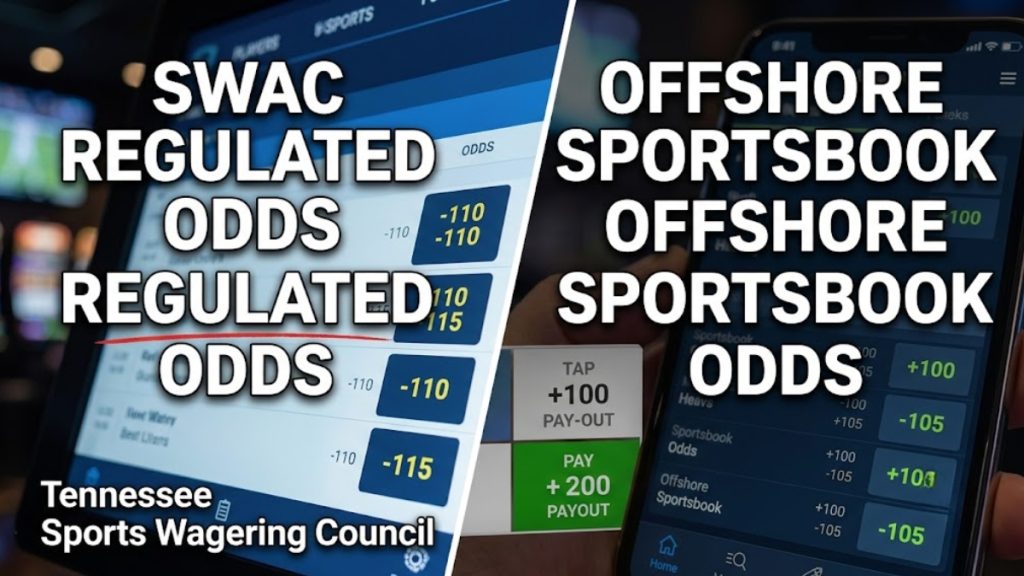
The regulated apps achieve this higher hold by juicing lines, pushing parlays harder, and offering less competitive odds on standard spreads and totals. We compared Titans moneyline odds across regulated TN apps and offshore books over the entire 2025 NFL season. The offshore lines were consistently 5-15 cents better. On a -200 favorite, that’s real money.
The math is clear: Tennessee’s mandatory 10% hold, enforced by SWAC since 2020, costs the average regular bettor over $1,000 per year compared to standard industry odds available at offshore sportsbooks.
What Are the Best Offshore Sportsbooks for Tennessee Bettors?
Since Tennessee’s regulated market gives you worse odds by design, offshore books are where sharp TN bettors find actual value. We’ve been using these platforms for years and tracking payouts, line quality, and customer service across all of them.
Bonus amounts current as of June 2026. Terms and rollovers apply.
Bovada is our go-to recommendation for Tennessee bettors. Their lines are consistently tight, the live betting interface runs smooth, and crypto withdrawals process within a day. We’ve personally cashed out over 30 times on Bovada without a single issue. The prop builder for NFL games is better than anything available on the regulated TN apps — and that’s not even accounting for the odds advantage.
BetOnline takes the edge on prop variety and alternative lines. Want a -3.5 alt spread on the Titans instead of the standard -7? BetOnline has it. They also list odds on stuff the regulated books won’t touch — like entertainment props and political futures.
MyBookie runs the best reload bonuses in the offshore space. If you’re betting regularly, those 25% reloads add up to hundreds of dollars a year in free play. Their MyBookie sportsbook breakdown covers the full picture on what you’re getting.
BetUS has the fattest welcome bonus in the game — 125% up to $2,500 on your first crypto deposit. Yes, the rollover is higher than Bovada’s. But if you’re a volume bettor cranking through action on SEC football and Titans games every week, you’ll clear it. Check our BetUS review for the honest rundown on rollover terms.
Everygame flies under the radar but has been operating since 1996 — longer than most regulated books have existed. Solid pick if you’re into soccer, tennis, or want to bet World Cup 2026 matches from Nashville.
None of these books are subject to Tennessee’s 10% hold rule. None of them block credit card deposits like the regulated apps do. And all of them accept crypto — which is the fastest way to move money in and out.

Tennessee Sports Betting Apps — What’s Available on Regulated Platforms?
Tennessee has 12 licensed sportsbook operators as of June 2026. Here’s the full list of what’s running legally under SWAC oversight:
- FanDuel Sportsbook
- DraftKings Sportsbook
- BetMGM Sportsbook
- Caesars Sportsbook
- bet365
- Fanatics Sportsbook
- Hard Rock Bet
- theScore Bet (formerly ESPN BET — rebranded after PENN Entertainment split from ESPN in late 2025)
- Action24/7 (Tennessee-based operator)
- Bally Bet
- Betly
- VIP Play
We list these for transparency. Every TN betting guide pretends these are your only options, throws affiliate links at you, and calls it a day. That’s not how we operate.
These apps all function fine. Sign-up is straightforward — download the app, verify your identity, fund your account, and place bets from anywhere inside state lines. The process takes about 10 minutes.
But here’s what the other guides skip: regulated TN books cannot accept credit card deposits. The state banned it. So you’re stuck with debit cards, bank transfers, or PayPal-type services. That’s a real limitation. Offshore books accept credit cards, debit cards, crypto, and more — with zero restrictions.
The regulated apps also share one other downside. Because Tennessee is online-only with no retail component, there’s no in-person registration option. You can’t walk into a sportsbook lobby to settle a dispute or cash a ticket. Everything happens through customer support chat or email.
The 12 licensed Tennessee sportsbook apps all operate under SWAC’s 10% mandatory hold rule, meaning odds across every regulated platform carry a built-in disadvantage compared to offshore alternatives, as of June 2026.
Tennessee Gambling Laws: What You Need to Know
Tennessee’s gambling laws are some of the most restrictive in the South, which makes the sports betting legalization even more surprising.
- Sports Betting: Legal, online-only. No retail sportsbooks. Minimum age 21. Regulated by SWAC. The 10% mandatory annual hold applies to all licensed operators.
- Online Casino: Not legal. No bills pending. Don’t hold your breath on this one — Tennessee’s legislature has shown zero appetite for iGaming expansion.
- Daily Fantasy Sports (DFS): Legal. FanDuel, DraftKings, and others operate DFS contests for Tennessee residents. Regulated separately from sports betting.
- Lottery: The Tennessee Education Lottery has operated since 2004. Powerball, Mega Millions, and state-specific games available at retail and online through the official lottery app.
- Poker / Table Games: Not legal outside of charity events with specific permit requirements. No poker rooms. No card rooms.
- Horse Racing: Tennessee permits simulcast wagering through advance deposit wagering (ADW) platforms. No live horse racing tracks operate in the state.
- Minimum Betting Age: 21 for sports betting. 18 for lottery and DFS.
- Tax on Winnings: Tennessee has no state income tax, which is a genuine perk for bettors. Federal taxes still apply — the IRS wants their cut on any net winnings over $600 on a single wager (or 300:1 payout). Sportsbooks issue a W-2G form for qualifying wins. Keep your records clean, especially if you’re betting with offshore books that won’t automatically report to the IRS.
- The College Campus Ban (NEW – May 2026): HB 5229, sponsored by state lawmakers Jeff Yarbro and John Ray Clemmons, passed in May 2026 and bans all sports betting from college campuses statewide. This means geofencing technology will block betting apps from functioning on campus Wi-Fi networks and within defined perimeters around college sports venues. The bill came after a wave of NCAA betting scandals involving student-athletes. UT Knoxville already fired a student worker in early 2026 for using Kalshi’s sports-related contracts on campus.
The state regulatory body is the Sports Wagering Advisory Council (SWAC), reachable at [email protected] or 615-253-7922, operating under Tennessee Code Annotated Title 4, Chapter 51.
How Much Money Flows Through Tennessee Sports Betting?
Tennessee’s betting handle has grown every single year since launch. The numbers, pulled directly from SWAC’s monthly reports and verified through the American Gaming Association, tell the story:
Source: SWAC monthly reports via rg.org verified data, June 2026
Through the first five months of 2026, Tennessee has already processed $2.49 billion in handle with $229.2 million in gross revenue. March 2026 hit $562.6M in single-month handle — the second-highest month in state history.
That 1.85% handle-based tax structure — which Tennessee switched to in 2023 from the original 20% of gross gaming revenue model — generates roughly $8-10 million per month for the state regardless of how books perform on any individual month. Smart move by the legislature. They guaranteed their bag.
For context, Tennessee ranks in the top 10 nationally for sports betting handle despite having zero retail locations. The Volunteer State punches above its weight. But that hold percentage hovering around 9.2% tells you the sportsbooks are squeezing right up against that 10% mandate.
Tennessee processed $5.84 billion in sports betting handle during 2025, generating $107.6 million in state tax revenue under the 1.85% handle-based tax structure, per SWAC monthly reports.
Land-Based Casinos & Sportsbooks in Tennessee
There aren’t any. Not a single one.
Tennessee has no commercial casinos, no tribal casinos within state borders, and no retail sportsbooks. It’s one of a handful of states where you literally cannot walk into a building and place a legal sports bet.
That said, Tennessee bettors love watching their bets at the big venues:
Bridgestone Arena in downtown Nashville is where the Predators play. The atmosphere during NHL playoffs is electric, and there’s always a crew in the concourse checking their apps between periods. We were there for the 2024 playoff run and the number of people refreshing their sportsbook apps was absurd.
Nissan Stadium — home of the Titans — sits right across the Cumberland River. The new stadium project is underway, and you can bet the in-app wagering on game days will only increase when the new building opens. Titans games already generate some of the highest single-day handle spikes in TN.
FedExForum in Memphis hosts the Grizzlies. Ja Morant’s return to form in 2025-26 brought Memphis bettors back in force, and the Grizz player prop market on offshore books has been one of our more profitable angles all season.
If you want the retail casino experience, your closest options are across state lines. Tunica, Mississippi is about 30 miles south of Memphis — Horseshoe Tunica, Gold Strike, and Hollywood Casino are all right there. Harrah’s Cherokee in western North Carolina runs a full retail sportsbook too.
Tribal Gaming in Tennessee
Tennessee has no federally recognized tribes with gaming compacts within the state. Zero tribal casinos. The Eastern Band of Cherokee Indians operates casinos in neighboring North Carolina (Harrah’s Cherokee Casino Resort and Harrah’s Valley River Casino), and those properties are popular destinations for east Tennessee bettors making the drive.
There’s been no serious push to establish tribal gaming in Tennessee, and given the state’s conservative legislature, this isn’t changing anytime soon. The online-only sports betting model was already a heavy lift politically — land-based casino expansion is a non-starter in Nashville.
The Prediction Markets Fight: SWAC vs. Kalshi
This is getting ugly, and it matters for TN bettors.
In January 2026, SWAC ordered Kalshi, Polymarket, and Crypto.com to stop offering sports-related contracts to Tennessee residents. The SWAC’s argument: sports event contracts are functionally sports bets, and operating without a Tennessee license is illegal.
Kalshi fought back hard. They filed suit in federal court, arguing their event contracts are CFTC-regulated “swaps” — not state-jurisdictional gambling products. In February 2026, a federal judge in Tennessee actually sided with Kalshi and granted a preliminary injunction.
The Tennessee Attorney General appealed, and this thing is now heading to the Sixth Circuit Court of Appeals. The outcome will set a major precedent — not just for Tennessee, but for every state trying to regulate prediction markets.
We’ve been tracking prediction market news closely because this fight is about control. If Kalshi wins, prediction markets operate outside state gambling regulators entirely. If Tennessee wins, every state gets to decide whether platforms like Kalshi can offer sports contracts to their residents. Huge implications either way.
In the middle of all this, UT Knoxville fired a student worker in February 2026 for trading sports contracts on Kalshi while on campus. The incident fed directly into the campus betting ban push.
Latest Tennessee Gambling News & Legislative Updates
- May 2026 — College Campus Betting Ban Signed (HB 5229): Sponsors Jeff Yarbro and John Ray Clemmons got this one across the finish line after multiple NCAA betting scandals involving student-athletes. Starting fall 2026, geofencing technology will block sportsbook apps on all public college campuses in Tennessee. Private universities can opt in. We covered this in our Tennessee betting bill update.
- March 2026 — Record Handle Month: Tennessee posted $562.6 million in single-month handle for March, driven by March Madness and SEC basketball tournament action. That’s just shy of the all-time record set in October 2024 ($547.8M for regular monthly handle during football season).
- February 2026 — Kalshi Wins Round One: Federal judge grants preliminary injunction preventing SWAC from blocking Kalshi’s sports event contracts. Case now on appeal to the Sixth Circuit.
- December 2025 — ESPN BET Becomes theScore Bet: PENN Entertainment’s failed ESPN partnership ended, and the platform rebranded to theScore Bet for Tennessee bettors. Same platform, different name.
- March 2025 — bet365 Enters Tennessee: The UK-based sportsbook launched in the TN market, becoming the 12th licensed operator. Their in-game betting product is solid, but they’re still subject to the same 10% hold rule as everyone else.
- April-May 2025 — SWAC Fines Offshore Books: $200,000 in combined penalties hit BUSR, BetUS, MyBookie, and XBet. BetOnline received a cease-and-desist. None of these actions actually stopped the books from serving TN bettors — the SWAC can levy fines, but enforcement across borders is a different story.
How to Start Betting Online in Tennessee
Getting started takes less than 15 minutes whether you go regulated or offshore.
On a Regulated TN App:
- Download any licensed sportsbook app from the App Store or Google Play
- Create your account with name, address, and last four digits of your SSN
- Verify your identity — the app will run a quick background check
- Fund your account via debit card, bank transfer, or PayPal (no credit cards allowed on regulated TN apps)
- Place your first bet from anywhere inside Tennessee
On an Offshore Sportsbook (Our Recommended Path):
- Visit Bovada.lv, BetOnline.ag, MyBookie.ag, or BetUS.com from any device
- Create your account — takes 2 minutes, requires basic contact info
- Make your first deposit using Bitcoin, Ethereum, Litecoin, or a credit/debit card
- Claim your welcome bonus (Bovada: 75% up to $750 crypto; BetUS: 125% up to $2,500)
- Start betting with better odds than any regulated TN app offers
Crypto is the move for offshore deposits. Period. It processes in minutes, carries no bank transaction fees, and withdrawals hit your wallet within 24-48 hours. We use Bitcoin for almost everything. If you’re new to crypto, Coinbase or Cash App both let you buy BTC in about five minutes.
For your first bet? We’d suggest starting with a standard NFL spread or SEC football game — something you know, something with high liquidity. Don’t jump straight into five-leg parlays on your first day. Save the degen energy for week three.
Payment Methods for Tennessee Bettors
The credit card ban on regulated Tennessee apps is a real annoyance. Colorado just passed something similar with their SB26-131 reform bill. We’ve seen states go this direction as a “responsible gambling” measure, but it really just pushes bettors toward offshore books that don’t have the restriction.
Crypto remains king for speed and flexibility. If you’re pulling $500+ out of Bovada, Bitcoin gets it to your wallet by tomorrow. Try that with a bank transfer on a regulated app — you’re waiting a week minimum.
How Does Tennessee Compare to Neighboring States?
Status current as of June 2026
Tennessee stands alone with that mandatory hold rule. Kentucky launched in 2023 with no such requirement. North Carolina went live in March 2024 with tribal retail plus statewide mobile — no hold mandate. Even Mississippi, which only allows retail wagering, doesn’t force its books to hold a minimum percentage.
Georgia and Alabama remain the holdouts in the region. Georgia’s been fighting over legalization bills for years but keeps hitting a wall. Alabama had a push in 2025 that also went nowhere. If you’re a bettor in Chattanooga near the Georgia line, or in Memphis with Mississippi right there — offshore books are the simplest way to bet without crossing state lines or dealing with Tennessee’s inflated odds.
Missouri just hit $1.5 billion in handle in their first year. No hold mandate. No credit card ban. That’s how Tennessee’s regulated market looks compared to its neighbors: restrictive and more expensive for the bettor.
Responsible Gambling Resources in Tennessee
SWAC requires all licensed operators to provide responsible gambling tools including deposit limits, time limits, loss limits, and self-exclusion options. Tennessee’s self-exclusion program lets you ban yourself from all licensed sportsbook apps for a minimum of one year through the SWAC website.
- Tennessee Problem Gambling Helpline: REDLINE at 1-800-889-9789
- National Council on Problem Gambling: 1-800-522-4700 (call or text, 24/7)
- Crisis Text Line: Text HOME to 741741
Look, betting should be fun. The second it stops being entertainment and starts being a problem, use these resources. No hot take here — just the reality. Set your limits before you start, especially if you’re new to this. Every offshore book we recommend also has self-exclusion options and deposit limit controls in their account settings.
Final Thoughts from the Rail
Tennessee’s sports betting market is a weird one. On paper, it’s a success story — $5.8 billion in annual handle, steady growth every year, a dozen licensed operators, and a tax structure that keeps the state’s revenue predictable. SWAC runs a tight ship on enforcement.
But that 10% hold rule is an anchor around every Tennessee bettor’s ankle. We’ve said it since 2021 and we’ll keep saying it: the mandatory hold is the worst regulation in American sports betting. It literally requires the books to give you worse odds. I’ve compared lines on Titans games between FanDuel’s Tennessee app and Bovada at least fifty times now. Bovada wins on price damn near every time.
If you’re in Nashville watching the Preds at Bridgestone or tailgating at Nissan Stadium before a Titans game, you can place a legal bet through any licensed app. That’s great. That’s progress. But if you care about getting the best number on that Titans -3.5 — and you should, because that’s the difference between winning and losing over a season — offshore books are where the value lives.
We’ll keep tracking Tennessee betting updates as the campus ban rolls out, the Kalshi case works through appeals, and SWAC’s next round of enforcement actions drop. This state’s regulatory story is far from over.
Smart money finds value. In Tennessee, that means looking beyond the state line — even if you never leave your couch.
Frequently Asked Questions
Yes. Tennessee has had legal online sports betting since November 1, 2020. You need to be 21+, physically located in the state, and use a licensed app or an offshore sportsbook.
The 10% mandatory hold requirement. Tennessee is the only state that forces licensed operators to hold at least 10% of all wagers annually. The national average is around 7%. Offshore books have no such mandate, which is why their lines are consistently better.
SWAC has fined several offshore operators (BetUS, MyBookie, BetOnline, XBet) for operating without a Tennessee license. No Tennessee bettor has ever been prosecuted for using an offshore sportsbook, though. The legal risk falls on the operator, not the bettor.
21 for sports betting on licensed apps and offshore sportsbooks. 18 for lottery tickets and DFS contests.
Yes, you can bet on college games including Tennessee Volunteers and Vanderbilt Commodores. But as of fall 2026, HB 5229 bans placing bets while physically on a college campus or within a college sports venue geofence.
Tennessee has no state income tax, so you won’t owe state taxes on gambling winnings. Federal taxes still apply — the IRS requires reporting on net winnings exceeding $600 on a single bet or payouts at 300:1 odds or greater.
No. Tennessee banned credit card deposits on regulated sportsbook apps. You’re limited to debit cards, bank transfers, and e-wallets. Offshore sportsbooks still accept credit cards and crypto with no restrictions.
ESPN BET rebranded to theScore Bet in December 2025 after PENN Entertainment ended its partnership with ESPN. Same platform under the hood. Different paint job.
Tennessee processed $5.84 billion in handle during 2025, ranking in the top 10 nationally — impressive for a state with zero retail sportsbooks and only mobile wagering.
The Sports Wagering Advisory Council is Tennessee’s regulatory body for sports betting, taking over from the Tennessee Education Lottery in 2022. They license operators, enforce the 10% hold rule, publish monthly reports, and have been actively going after offshore books with fines and cease-and-desist orders.
Absolutely. All licensed TN apps and offshore sportsbooks let you bet on professional and college teams while you’re inside state lines. Just remember the campus ban starting fall 2026 if you’re at a UT or Vanderbilt game.
SWAC ordered Kalshi to stop offering sports event contracts to TN residents in January 2026. Kalshi sued and won a preliminary injunction in February 2026. The case is heading to the Sixth Circuit Court of Appeals and could set national precedent on whether prediction markets are gambling products or federally regulated financial instruments.
Yes. Bitcoin, Ethereum, and Litecoin deposits process in under 30 minutes, carry no bank-related fees, and withdrawals typically hit your wallet within 24-48 hours. It’s faster and cheaper than every other option.
📂 Explore more: Tennessee