

Quick answer: The Senate blocked the CLARITY Act on September 15, 2026. The procedural vote finished 49-50, and 60 votes were needed to move forward. For bettors, nothing changes right now. There is still no federal crypto rulebook, prediction markets did not get a federal green light for sports contracts, and regulated U.S. sportsbooks still mostly cannot take crypto deposits.
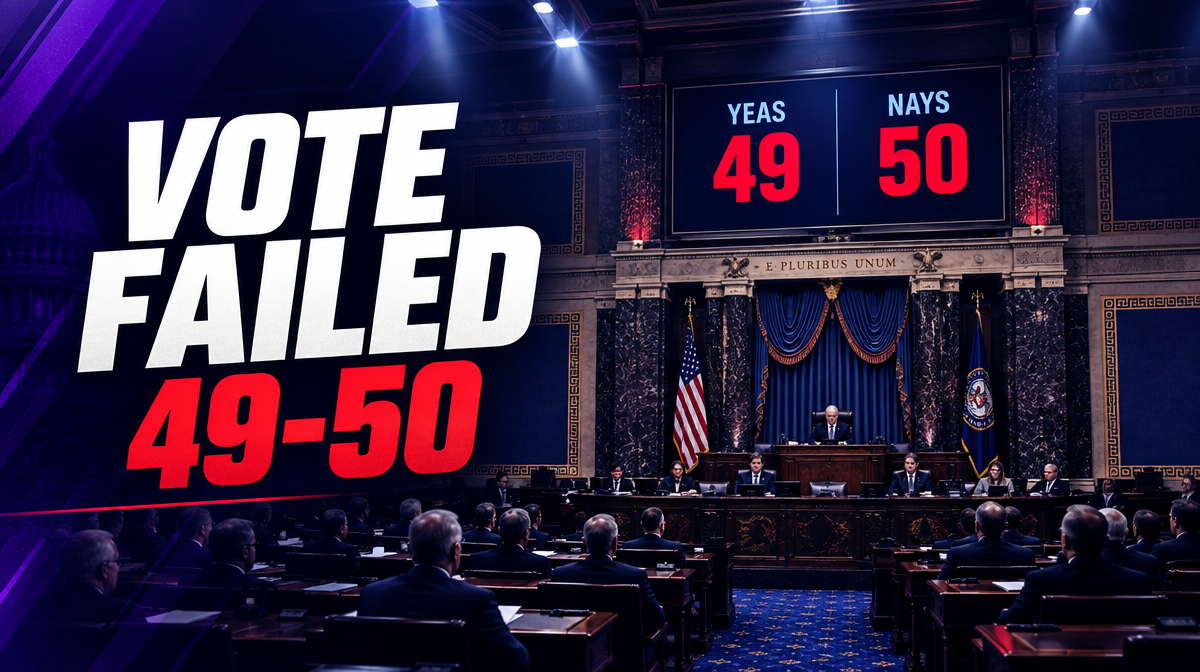
The CLARITY Act is dead for now. On September 15, 2026, the Senate failed to advance the Digital Asset Market Clarity Act (H.R. 3633), the biggest crypto bill Congress has taken up. The cloture vote came in at 49-50. Supporters needed 60. That gap was not close.
This was a crypto bill, so a lot of bettors scrolled past it. That would be a mistake. Gambling groups spent months fighting this bill, and the Indian Gaming Association (IGA) led the charge. The reason was simple: the bill did not block prediction markets from offering sports and casino action through event contracts. Here is what happened, why the gambling industry cared so much, and what it means for your account and your bets.
Key Takeaways
- The vote failed 49-50 on September 15, 2026. Sixty votes were needed to advance the bill. Some reports listed the tally as 50-49 in favor, but either way it fell well short of 60.
- Four Republicans broke ranks. Jerry Moran, Susan Collins, Josh Hawley, and Thom Tillis voted against moving the bill forward.
- Tribal gaming called it a win. IGA Chairman David Z. Bean said, “The Senate did the right thing,” and framed the result as a victory for Tribal sovereignty.
- The gambling fight was about event contracts. A June 16 coalition letter from the AGA, IGA, AGEM, and UNITE HERE asked lawmakers to ban sports and casino event contracts. The bill never did that.
- Markets reacted fast. Bitcoin dropped about 3%, and Coinbase and Circle shares fell 8-10%.
- For bettors, it is status quo. Offshore books keep taking crypto with no new federal rules, and regulated books still mostly cannot.
This article is based on the recorded Senate vote on H.R. 3633, the Indian Gaming Association’s own public statement, the June 16 industry coalition letter, and contemporaneous reporting from iGaming Business, CNBC, Reuters, and Forbes. Crypto usage figures come from a June 2026 Paysafe report as cited by iGaming Business. We do not test, deposit at, or bet with any platform named here, and nothing below is legal advice.
Affiliate Disclosure: Daily Wager Zone may earn a commission if you sign up through our links at no extra cost to you. This does not influence our analysis or recommendations.
What happened in the Senate vote?
The Senate held a cloture vote on September 15, 2026. A cloture vote is not a vote to pass a bill. It is a vote to end debate and let the bill move to a final vote. In the Senate, that step usually needs 60 votes.
The CLARITY Act got nowhere near 60. The tally came in at 49-50. Some outlets reported the count as 50-49 in favor. The small difference does not matter much. Either number is more than 10 votes short of the bar.
So the bill stalled. It was not voted down on the merits, and it was not amended into something new. It simply could not clear the procedural hurdle that comes first.
Which Republicans voted no?
Four Republicans broke with their party on this one. That was enough to sink the vote.
| Senator | State |
|---|---|
| Jerry Moran | Kansas |
| Susan Collins | Maine |
| Josh Hawley | Missouri |
| Thom Tillis | North Carolina |
Ethics questions also hung over the debate. Concerns about President Trump’s crypto business ties were a factor in the pushback, and reporting from Forbes noted the failed vote was not a surprise to people following the bill closely.
What was the CLARITY Act supposed to do?
The Digital Asset Market Clarity Act was built to answer one basic question: who is in charge of crypto in the United States? Right now, two agencies both have a claim, and the lines between them are blurry. The bill would have drawn those lines and set up a federal framework for digital assets.
CFTC Chairman Michael Selig pushed hard for it. His agency stood to gain clear authority over big parts of the crypto market. With the bill stalled, that authority never arrived. The CFTC is left running on the same unsettled ground it was on before.
The crypto industry treated the vote as a real setback. Bitcoin fell about 3% after the result. Shares of Coinbase and Circle, two companies whose business depends on clear U.S. rules, dropped 8-10%.
Why did the Indian Gaming Association oppose the bill?
Here is the part most crypto coverage skipped. A crypto bill became a gambling fight.
The IGA opposed the CLARITY Act because it did not prohibit prediction markets from offering sports betting and casino gambling through event contracts. An event contract is a financial product. You buy a position on whether something will happen. When the “something” is a football game, that product starts to look a lot like a bet.
Tribal gaming sees that as a threat to sovereignty. Tribes built their gaming under a federal law with strict rules and state compacts. A federal market could offer the same action without those rules. It would sit outside the whole system.
After the vote, IGA Chairman David Z. Bean said, “The Senate did the right thing.” He called the outcome a victory for Tribal sovereignty.
Who else signed the coalition letter?
The IGA was not alone. A coalition letter dated June 16 urged lawmakers to ban sports and casino event contracts in the bill. The signers covered a wide slice of the gambling world.
- American Gaming Association (AGA), which represents commercial casinos and major sportsbooks
- Indian Gaming Association (IGA), which represents Tribal gaming interests
- Association of Gaming Equipment Manufacturers (AGEM)
- UNITE HERE, the union representing many casino workers
That is casinos, tribes, equipment makers, and labor on the same page. The ask never made it into the final bill, and the industry kept pushing against the bill as written.

What does this mean for Kalshi and Polymarket?
Prediction markets did not lose anything on September 15. They also did not gain the thing they wanted most.
Kalshi and Polymarket have grown fast. They offer contracts on real-world outcomes, and that includes sports. A federal framework would have given them firmer ground when states and tribes push back. The stalled bill means that firmer ground is not coming from Congress anytime soon.
Meanwhile, the courts are moving. A recent Ninth Circuit ruling treated sports event contracts as Class III gaming under the Indian Gaming Regulatory Act (IGRA). In plain terms, a federal appeals court looked at sports event contracts and said they belong in the gambling bucket, not a separate financial one.
That combination matters. No new federal blessing from Congress, and a court decision that pulls sports contracts toward gaming law. The fight between tribal gaming and traditional sportsbooks on one side and prediction markets on the other is not over. It just moved back to courtrooms and state regulators.
What does this mean for crypto betting deposits?
This is the piece that touches the most bettors. Crypto and betting already overlap a lot. A June 2026 Paysafe report found that 64% of online sports bettors dabble in crypto.
But the legal, regulated side of U.S. betting has barely opened the door. Only Wyoming and Colorado allow crypto deposits for betting. No state allows crypto withdrawals. So even where you can put crypto in, you are cashing out another way.
| Crypto action at regulated U.S. books | Status |
|---|---|
| Crypto deposits in Wyoming | ✅ Allowed |
| Crypto deposits in Colorado | ✅ Allowed |
| Crypto deposits in every other state | ❌ Not allowed |
| Crypto withdrawals in any state | ❌ Not allowed |
| Federal crypto framework | ⏳ Stalled after the September 15 vote |
Offshore sportsbooks have no such limits. They take crypto freely, and the failed vote means they face no new federal rules on it. That is the awkward result here. Bettors who want crypto get pushed offshore. Those sites have no U.S. licence, no state protections, and no regulator to call when something goes wrong.

Say you live in Ohio and keep most of your money in stablecoins. Your licensed sportsbook will not take a crypto deposit, so you move funds to a bank account first and wait. An offshore site would take the same crypto in minutes. The convenience gap is real, and so is the protection gap. If an offshore book voids your bet or sits on a withdrawal, the Ohio regulator cannot help you.
Could Congress bring the bill back?
It is possible, but do not hold your breath. A lame duck session after the midterms is the most talked-about path, and even that looks unlikely. Big financial bills are hard to move when lawmakers are heading into an election.
Any revival also has to deal with the gambling problem that helped sink it. If a future version bans sports and casino event contracts, the gambling coalition may stand down, but prediction markets will fight it. If it stays silent on event contracts, the coalition comes back. That is a tough needle to thread.
What should bettors do now?
Nothing about your account changed on September 15. Your app works the same way today as it did last week. Still, a few things are worth knowing.
- Expect the same deposit options you already have. No federal change means no new crypto rails at licensed books.
- Treat offshore crypto convenience as a trade-off, not a feature. You give up regulator protection to get it.
- Watch the courts, not Congress. The Ninth Circuit ruling on sports event contracts is the bigger short-term signal.
- Follow your own state regulator if you use prediction markets for sports. State action can change what you can access with little warning.
The short version: this vote was a loss for crypto companies, a win for tribal gaming, and a hold for everyone placing bets.
Frequently Asked Questions
Was the CLARITY Act defeated or just delayed?
Technically delayed. The September 15, 2026 vote was a cloture vote to end debate, not a final vote on the bill. It failed 49-50 when 60 votes were needed, so the bill stalled rather than being formally voted down.
Why did a crypto bill matter to sports betting?
Because it touched prediction markets. The bill did not prohibit prediction markets from offering sports betting and casino gambling through event contracts, so gambling groups treated it as a gambling bill as much as a crypto bill.
Does this ban Kalshi or Polymarket sports contracts?
No. The failed vote does not ban anything. It simply means prediction markets did not get a clearer federal framework. The active pressure is coming from courts and state regulators instead, including a recent Ninth Circuit ruling treating sports event contracts as Class III gaming under IGRA.
Can I deposit crypto at a legal U.S. sportsbook?
Only in Wyoming and Colorado, and no state currently allows crypto withdrawals. That did not change with this vote.
What did the Indian Gaming Association say about the result?
IGA Chairman David Z. Bean said, “The Senate did the right thing,” and described the outcome as a victory for Tribal sovereignty.
Will Congress try again before the midterms?
A lame duck session is possible, but it is considered unlikely. Any new version still has to settle the event-contract question that helped stall this one.
References
- iGaming Business — CLARITY Act vote and prediction market implications (includes the June 2026 Paysafe crypto usage figure)
- Indian Gaming Association — Indian Country Stands Strong as Senate Blocks CLARITY Act
- CNBC — Senate cloture vote on CLARITY Act fails, dealing regulatory setback to crypto industry
- Reuters — US Senate vote on advancing landmark crypto bill
- Forbes — Failure of crypto CLARITY Act cloture vote not a surprise
Gambling involves risk. Only wager what you can afford to lose. You must be of legal age in your jurisdiction to bet on sports or gamble at a casino. If you or someone you know has a gambling problem, call 1-800-522-4700 (National Council on Problem Gambling) or dial 211.