
Colorado’s legislature passed SB26-131 on May 13, and the bill is sitting on Gov. Jared Polis’s desk right now. The Colorado Sports Betting Bill represents the biggest regulatory shakeup for Colorado sports betting since voters legalized it back in 2019, if the governor signs it — and he’s going to.
No more credit card deposits. A cap of six deposits per day. A full ban on push notifications trying to get you to place bets. And sportsbook marketing aimed at anyone under 21 is done.
But here’s what none of the Denver news stations are telling you: these rules only hit state-licensed sportsbooks. If you’re betting on Bovada or BetOnline from a couch in Fort Collins, absolutely nothing changes for you. Not one damn thing.
What Does SB26-131 Actually Do?
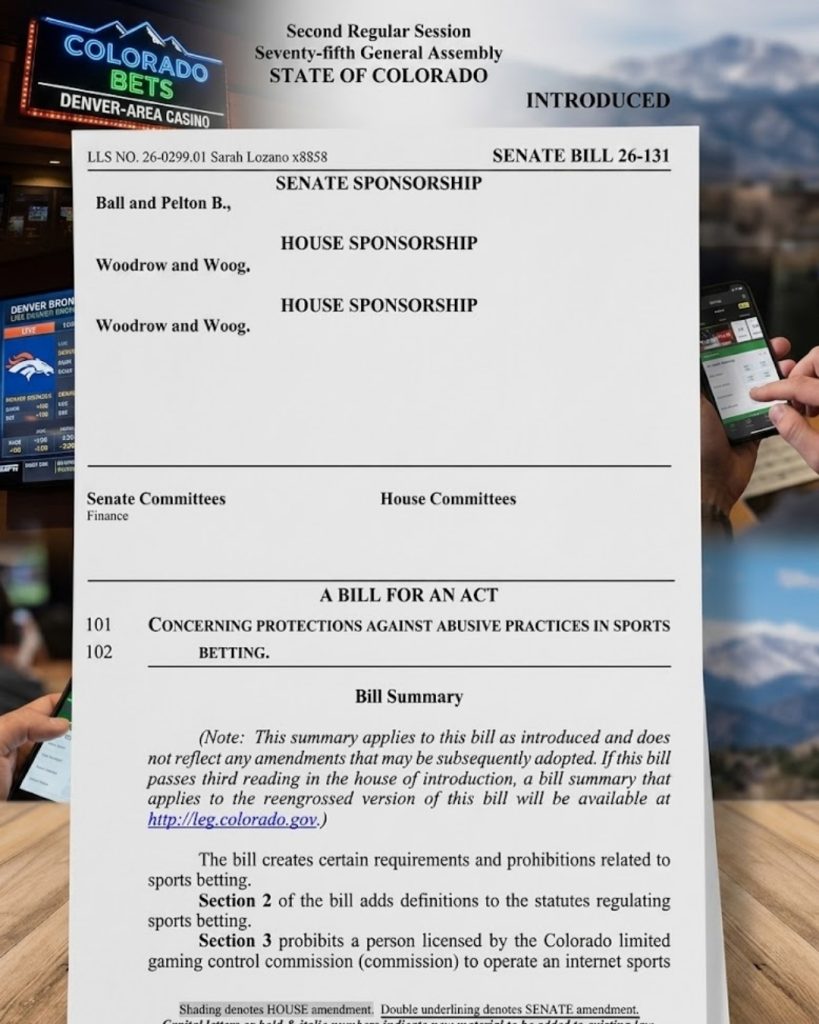
I tracked this bill through the Senate Finance Committee, the House floor vote, and two rounds of amendments. What survived looks very different from where it started:
- Credit card deposits — gone. Colorado becomes the tenth state to ban this practice, joining Ohio, Massachusetts, and seven others.
- Six deposits per 24-hour period. No cap on dollar amounts per deposit. You can still load $10,000 in one shot if your bank allows it. You just can’t fund your account seven separate times.
- Push notifications and texts banned. Those “Your team is playing! Bet now!” alerts that blow up your phone during NFL Sundays? Dead.
- Marketing restrictions. The terms “bonus bet” and “no sweat” are banned from promos. Sports betting ads can’t run between 8 AM and 10 PM or during live sporting events. Under-21 targeting is prohibited entirely.
- Sharp bettor protections. This one caught people off guard — the bill prevents sportsbooks from limiting accounts except for suspicious activity or responsible gambling flags. Colorado sharps just got a win they didn’t expect.
The Colorado Sports Betting Bill’s Failed Prop Bet Ban
Real talk — the original version of SB26-131 was way more aggressive. Sens. Matt Ball and Byron Pelton initially included a full ban on proposition bets.

That provision got axed in April after operators made their case. Props account for over half of all wagers on some platforms. Killing them would’ve ripped $800,000 to $2.4 million out of Colorado’s tax revenue in the first year. With a $46.8 billion state deficit, legislators weren’t about to blow that hole any wider.
Smart move. Props aren’t the problem here. Predatory marketing and credit card chasing are.
Colorado Sports Betting by the Numbers
Colorado opened its sports betting market in May 2020 with one of the most operator-friendly structures in the country. The growth has been wild:
That $29.1 billion puts Colorado seventh among all U.S. states in total amount wagered. For a state with 5.8 million people, that per-capita action is serious. But rapid growth brought aggressive marketing tactics and easy credit access that fueled problem gambling concerns — exactly what SB26-131 targets.
The Offshore Angle the Colorado Sports Betting Bill Doesn’t Address
Every major outlet covering this bill frames it purely around state-regulated books. And that’s fine for most of their audience. But a big chunk of Colorado bettors use offshore platforms, and SB26-131 doesn’t touch them.
Bovada, BetOnline, MyBookie — they aren’t licensed in Colorado. They don’t answer to the Colorado Division of Gaming. Credit card ban? Doesn’t apply. Deposit limits? Nope.

I’ve been covering state gambling laws for three years now, and this pattern repeats in every state that tightens regulations. Ohio did the same thing with their credit card betting ban two weeks ago. Same outcome — offshore bettors are untouched.
If you’ve been curious about cryptocurrency betting options, now’s probably the time to explore that. State-regulated deposit methods just got more restrictive. Crypto on offshore books? No such restrictions exist.
Will Polis Sign It?
Almost definitely. The Senate passed it 20-15. The House cleared it 50-13 with strong bipartisan support — Ball and Pelton are Republicans, co-sponsor Rep. Steven Woodrow is a Democrat. When both parties push the same gambling legislation, the governor has zero reason to veto.
Polis has 30 days to act. Expect a quiet signature, probably in late May or early June. The expected effective date is August 12, 2026.
Jamie Glick from the Problem Gambling Coalition of Colorado praised the credit card ban as targeting “one of the largest risk factors” for problem gambling. No organized opposition is pushing for a veto. This one’s a lock.
Frequently Asked Questions
Yes — voters approved it in November 2019 via Proposition DD. Both online and retail betting are available through 17 licensed operators. SB26-131 adds consumer protections. It doesn’t change legality.
August 12, 2026 is the expected date, assuming Polis signs. Switch to debit cards or bank transfers before then if you use state-licensed apps.
Not at all. The bill only covers Colorado-licensed operators. Offshore books like Bovada, BetOnline, and MyBookie operate outside state jurisdiction. Their deposit rules and marketing stay the same.
Yes. The prop bet ban was stripped from the final version of SB26-131 in April. Player props and game props remain fully legal.
Six per 24-hour “gaming day” under the new rules. No limit on how much you deposit each time — just how often.
📂 Explore more: Colorado