
The safest way to live bet a World Cup knockout match is simple: watch first, wait after big moments, check exactly what your bet covers, then bet small or skip it. Do not rush because a goal, card, or injury makes the odds flash.
Key Takeaways
- Watch before you bet. Give the match time to show you what is happening.
- Wait 3–5 minutes after a goal or red card. The odds can move fast while the sportsbook reacts.
- Read the market name. Some bets end after 90 minutes. Others include extra time or penalty kicks.
- Bet small. For every $100 in your betting bankroll, risk no more than 75 cents on one live bet.
- Skipping a bet is fine. If the price or rules are unclear, keep your money.
What makes a World Cup knockout match different?
A knockout match sends one team forward and the other team home. That changes how teams play. A team with a lead may slow down and defend more. A team that is losing may attack harder and leave open space behind its defense.
A tied score can also change the pace. Both teams may become careful because one mistake could end their tournament.
That is why you should not bet from the score alone. Watch how the teams react to the score. Our sports betting hub has more guides for reading a match before risking money.
How does the watch, wait, check, bet-or-pass plan work?
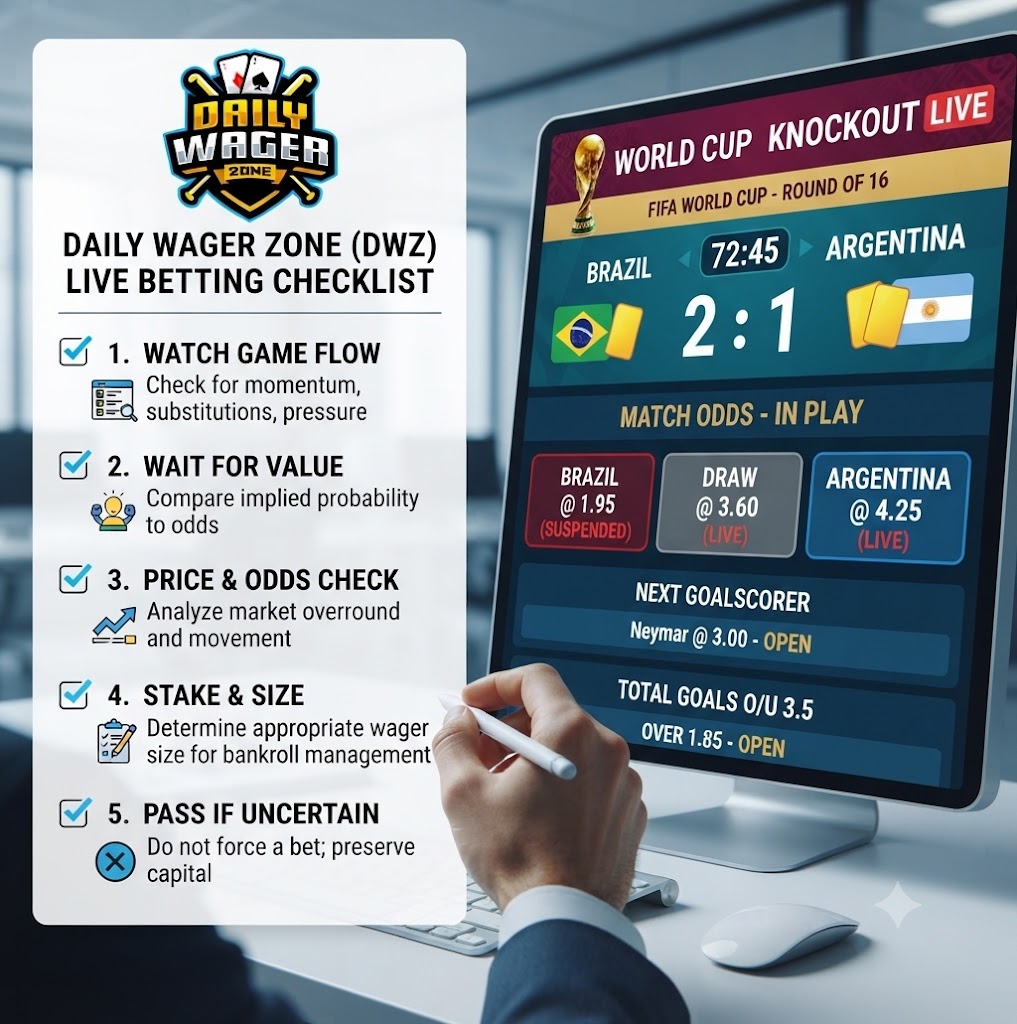
This four-step plan keeps you from making a heat-of-the-moment bet.
- Watch. Check the score, time, injuries, player changes, and cards. Look for which team is creating real shots.
- Wait. Pause after a goal, red card, or injury. Let the match and the odds settle.
- Check. Read the full bet name. Compare the same bet at more than one sportsbook if you can.
- Bet small or pass. Place the bet only if the price and rules make sense. Otherwise, skip it.
The bet slip should be your last step. Not your first.
Why should you wait after a goal or red card?
Wait because the sportsbook may quickly close and reopen its live bets. The new odds can jump around while the book reacts to what just happened.
BUSR’s 2026 World Cup guide suggests waiting 3–5 minutes after a major moment. That pause is not a magic trick. It just gives you time to think.
A red card means one team loses a player for the rest of the match. But that does not always mean more goals are coming. A team with 10 players may pull everyone back to protect the goal. If that happens, good shots may become harder to find.
So wait. See how both teams change their play. Then check the new price. Hammering the first number you see is a degen move, not a plan.
Does your bet include extra time and penalty kicks?
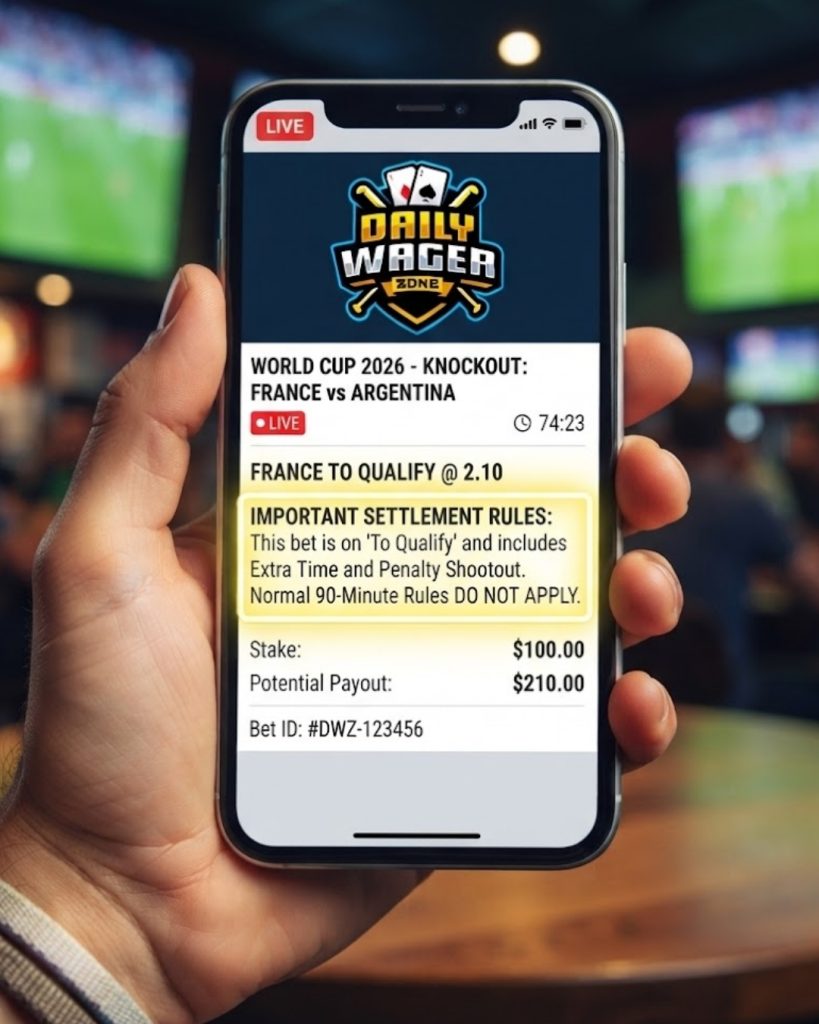
Only if the market rules say they count. This is the biggest trap for new World Cup bettors.
A standard three-way result bet usually has three choices: Team A, draw, or Team B. It normally ends after 90 minutes plus stoppage time. Stoppage time is the extra time added at the end of each half for delays.
Extra time is different. It is another 30 minutes played when a knockout match is tied. If the game is still tied, a penalty shootout decides which team moves on.
| Words on the bet | What they usually mean |
|---|---|
| 90 minutes or regulation | The bet ends after normal time and stoppage time. |
| To qualify or to advance | The team only needs to move to the next round. Extra time and penalty kicks usually count. |
| Including extra time | The extra 30 minutes count. |
| Including penalties | The shootout result counts. |
Do not guess. Read the bet slip and the house rules before you click. Bovada, MyBookie, and BetUS may use different labels. Our MyBookie review and BetUS review explain more about each platform.
What should a beginner watch during the match?
Start with five simple things. You do not need a coach’s clipboard.
- Score: Which team needs to attack?
- Time: How much of the match is left?
- Shots: Is either team getting clear chances near the goal?
- Cards and injuries: Has either team lost a player or made a forced change?
- Player changes: Did a team bring on an attacker or replace one with a defender?
One shot does not prove a team has taken control. Look for a pattern over several minutes. If you cannot explain what changed in one plain sentence, you probably do not have a strong reason to bet.
How much should a beginner risk on a live bet?
Risk no more than 0.75% of your betting bankroll on one live bet. Your bankroll is the money you set aside for betting. It should never include rent, food, bills, or emergency cash.
| Your betting bankroll | Maximum for one live bet | Maximum across the whole match |
|---|---|---|
| $100 | $0.75 | $1.50 |
| $500 | $3.75 | $7.50 |
| $1,000 | $7.50 | $15.00 |
Do not double your next bet after a loss. That is called chasing. It can turn one small loss into a bad night fast.
Set your money aside before the match starts. If you use digital coins to fund an account, read our crypto betting guide before kickoff—not while the clock is running.
When should you skip a World Cup live bet?
Skip the bet when you do not understand the market, your video stream is delayed, the odds moved before you clicked, or you already reached your match limit.
You should also stop if you feel angry or rushed. Live betting is built to make every second feel urgent. Your money does not have to move just because the match does.
Watch. Wait. Check the rules. Bet small or pass. That is the whole plan.
References
- BUSR: 2026 FIFA World Cup Betting Guide — guidance on pausing after a major match event.
- LiveScore: World Cup In-Play Betting — live odds and red-card basics.
- Action Network: How to Bet on the World Cup — common events that move live odds.
About Jake Mercer
Jake Mercer is DailyWagerZone’s sports betting analyst. He explains odds, betting rules, and bankroll limits in plain English so readers can make clearer decisions.
Bet only what you can afford to lose. If betting stops feeling fun or controlled, step away and use the limits offered by your sportsbook.
📂 Explore more: FIFA Predictions
Related Reading
- Browse All FIFA Predictions
- What Is the Best Live Betting Strategy for the 2026 FIFA World Cup?
- World Cup 2026 Quarterfinal Best Bets: All 4 Matches Broken Down
- France vs Morocco World Cup 2026 Picks: Best Bets for Today’s Quarterfinal