
The best NFL betting strategies for beginners come down to four habits: bet small amounts you can afford to lose, shop for the best price on every bet, understand the three main bet types before you wager, and skip the fancy stuff until you know the basics. Do those four things and you’re already ahead of most new bettors. This guide walks you through each one in plain English, with simple dollar examples so nothing feels over your head.
Key Takeaways
- Bet 1–2% of your bankroll per game. With a $500 starting fund, that’s $5–$10 a bet — small enough to survive a bad week.
- Line shopping is the easiest edge you have. Getting -105 instead of -110 saves real money over a season, and offshore books like BetOnline, MyBookie, Bovada, and BetUS let you compare prices in seconds.
- Master three bet types first: point spread, moneyline, and totals. Everything else can wait.
- Parlays and live betting look fun but drain beginner bankrolls fast. Use them rarely, if at all.
- Most beginners lose because they bet too big and chase losses, not because they picked the wrong team.
What Are NFL Betting Strategies, and Why Do Most Beginners Lose?
An NFL betting strategy is just a repeatable plan for how you pick bets and how much you risk. It’s not a secret system that prints money. It’s a set of rules that keeps you from making dumb, emotional decisions on a Sunday afternoon.
Here’s the hard truth. Most new bettors lose, and it usually isn’t because they can’t pick winners. They lose because they bet too much on one game, then bet even more trying to win it back. That’s called chasing, and it wipes out bankrolls fast.
The books also build in a small fee on most bets, called the vig or juice. On a standard bet you might see the number -110. That means you risk $110 to win $100. That extra $10 is the house’s cut. Over time, that fee is why you need to win about 53% of your bets just to break even — not the 50% most people assume.
Good strategy fights all of that. It keeps your bets small, your prices sharp, and your emotions out of it. If you’re brand new, start with our complete NFL betting guide for beginners and come back here for the strategy layer.
How Much Should a Beginner Bet? (Bankroll Management)
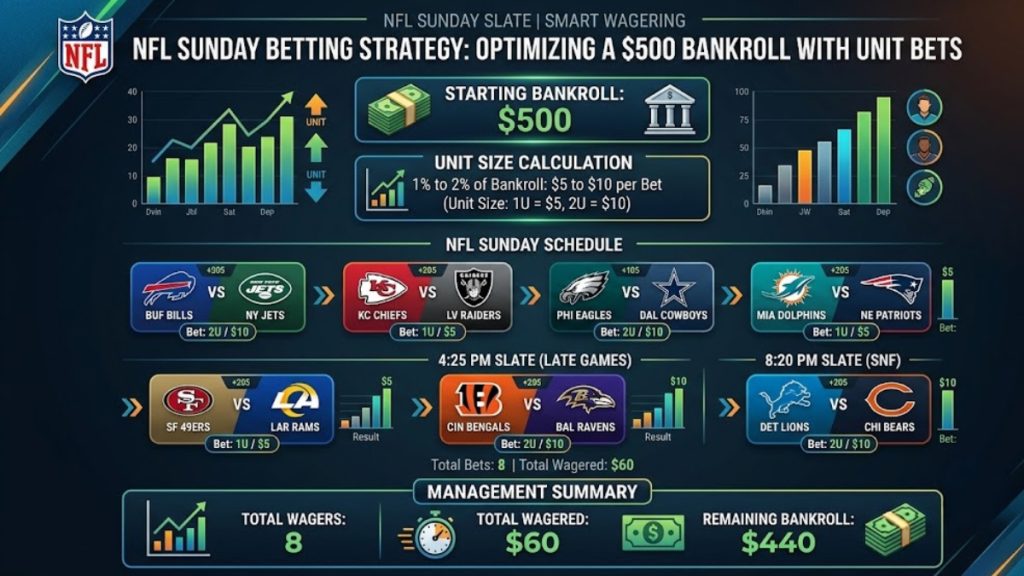
Your bankroll is the total pot of money you’ve set aside for betting — money you’re fully okay losing. The single most important rule is to bet a small, fixed slice of it on each game.
Most sharp bettors risk 1–2% of their bankroll per bet. That slice is called a unit. If you start with $500, one unit is $5 to $10. So even if you lose five bets in a row, you’re only down about $50, not your whole fund.
Why so small? Because bad luck comes in streaks. If you’re betting $100 a pop on a $500 bankroll, one rough week ends your season. At $10 a pop, you barely feel it and you live to bet another week.
Set your unit size before the season and don’t change it mid-week to make up for a loss. That discipline alone separates bettors who last from bettors who bust by October.
What Is Line Shopping, and Why Does It Matter So Much?
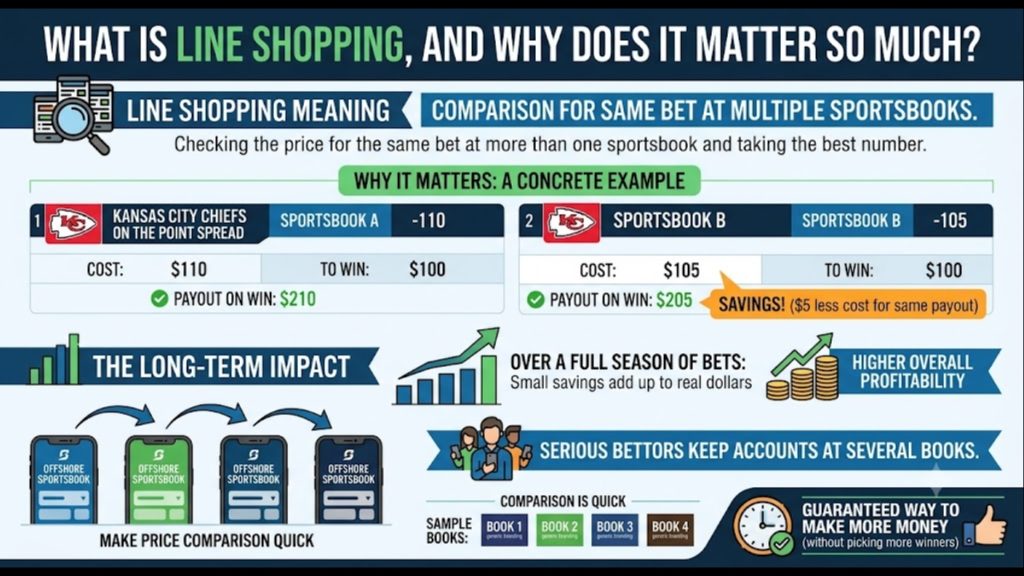
Line shopping means checking the price for the same bet at more than one sportsbook and taking the best number. It’s the easiest edge a beginner can grab, and it costs you nothing but a minute of time.
Say you want to bet the Kansas City Chiefs on the point spread. One book has them at -110. Another has the same bet at -105. Both pay if the Chiefs cover, but the -105 costs you less to win the same $100. Over a full season of bets, those small savings add up to real dollars.
This is why serious bettors keep accounts at several books. DWZ covers offshore sportsbooks because they’re the main option for bettors in states without legal betting, and they make price comparison quick. Here’s how the four books we track most often stack up.
Line shopping is boring. It’s also one of the few guaranteed ways to make more money without picking a single extra winner.
What Are Key Numbers in NFL Point Spreads?
A point spread is how many points a team must win by (or can lose by) for your bet to cash. If the Chiefs are -3, they need to win by 4 or more. If they win by exactly 3, that spread “pushes” and you get your money back.
That number 3 matters more than any other in football. NFL games land on certain final margins way more often because of how scoring works — a field goal is 3 points, a touchdown is 7. The most common margins of victory are 3 and 7, which is why bettors call them key numbers.
Here’s why that helps you. Getting a spread of +3 instead of +2.5 is a big deal, because so many games land on exactly 3. That half-point can be the difference between winning and pushing. This is another reason line shopping pays off — one book might offer the better side of a key number. We break the whole thing down in our guide to why NFL key numbers matter.
Moneyline vs. Spread vs. Totals: Which Should You Use?
There are three main bet types, and each fits a different situation.
A moneyline bet just picks the outright winner, no points involved. A point spread bet includes the margin, as we covered above. A total (also called the over/under) is a bet on the combined points both teams score — you pick whether the real total goes over or under the book’s number.
So when do you use each?
- Moneyline: Good when you like an underdog to win straight up, since the payout is bigger. Also simple for beginners — you just need your team to win. Learn the details in our moneyline bet explainer.
- Point spread: The standard NFL bet. Use it when you think a game will be close or when you like a favorite but not enough to lay a big moneyline price.
- Totals: Good when you have a read on pace or weather but not on who wins. If two high-scoring offenses meet indoors, the over might appeal even if you can’t pick a side.
For your first month, stick mostly to spreads and moneylines on single games. Totals are fine too. The point is to keep it simple and learn how each one behaves before mixing them.
Do Home Field and Weather Really Affect NFL Bets?
Yes, but less than most beginners think. Home teams do win a bit more often, partly from crowd noise and no travel. The old rule of thumb was worth about 3 points, though that edge has shrunk in recent years as teams travel smarter.
Weather is the bigger swing, and it mostly affects totals. Heavy wind is the real killer — it wrecks passing and field goals, which usually pushes scoring down. Cold and snow matter less than people assume, but a game with 20-plus mph wind is a genuine reason to look at the under.
Don’t overthink this. Check the forecast for outdoor games before betting a total, note who’s at home, and move on. These are small factors that nudge a lean, not reasons to bet by themselves.
When Should Beginners Use Parlays?
A parlay ties two or more bets into one ticket. Every leg has to win, and the payout is bigger because the odds are stacked against you. Miss one leg and the whole thing loses.
Parlays are fun and the payouts look tempting. That’s exactly why books push them. The more legs you add, the worse your true odds get, and the house edge grows with every leg. A beginner who lives on parlays will usually bleed their bankroll faster than one who sticks to single bets.
That doesn’t mean never touch them. A small two-team parlay now and then is fine as a low-stakes swing. Just treat it as entertainment money, not your core strategy. Our guide to parlay bets shows exactly how the math turns against you as legs pile up. You can estimate your parlay return with our free calculator before you bet.
Keep parlays under 5% of your weekly action, and never chase a losing week by loading up on a big-leg parlay. That’s how bankrolls die.
What Is Live Betting, and Should Beginners Try It?
Live betting, also called in-game betting, means placing bets while the game is happening. Odds shift in real time as the score and situation change.
It’s fast, and that’s the problem for beginners. Lines move in seconds, and it’s easy to fire off emotional bets after one big play. The books set these numbers with computers, so the room for a slow, thoughtful decision is small.
If you want to try it, set a hard rule: one small live bet per game, decided calmly, never as a reaction to the last play. Better yet, watch a few games and track what the live numbers do before you risk a dollar. Learn the pace first.
How Much Do Injuries and Roster News Matter?
A lot — especially at quarterback. The quarterback is the most valuable position in football, so news that a starter is out can move a spread by a touchdown or more. That’s why timing matters.
Injury reports come out through the week and firm up before kickoff. Sharp bettors watch them closely, because the earliest movement often happens right after big news drops. If you bet early and a key player is later ruled out, you might be stuck with a bad number.
For beginners, the simple habit is this: check the official injury report and confirm the starting quarterback is playing before you bet. That one check saves you from betting a team that’s quietly missing its most important player.
What Are the Most Common Beginner Mistakes?
Most new bettors trip over the same handful of errors. Avoid these and you skip the painful part of the learning curve.
- Betting too much per game. Stick to 1–2% of your bankroll. No single game is worth your whole fund.
- Chasing losses. Doubling your bet to win back a loss is how small dents become blowouts. Walk away from a bad day.
- Living on big parlays. The math favors the house more with every leg. Keep them rare and small.
- Betting with your heart. Backing your favorite team every week isn’t strategy. Bet the number, not the jersey.
- Ignoring the price. Taking -115 when -105 is available at another book throws away money for no reason.
None of these are about football knowledge. They’re about discipline. That’s the part beginners underrate and pros obsess over.
A Simple Weekly Betting Routine for Beginners
You don’t need a pro’s full-week grind. A light routine keeps you organized and stops rushed Sunday bets. Here’s a beginner version.
- Early week: Look at the schedule and pick two or three games you actually have a read on. Skip the rest.
- Midweek: Check injury reports and note any weather for outdoor games. Confirm the starting quarterbacks.
- Before kickoff: Line shop your chosen bets across your books and take the best price. Set your unit size and stick to it.
- After the games: Write down what you bet, the price, and the result. Reviewing your own record teaches you more than any tip sheet.
That’s it. Three or four solid bets a week, tracked and priced well, beats firing on ten games you barely researched.
A Quick Word on Betting Responsibly
Betting should be fun money, not rent money. Set a budget you can afford to lose, never bet to chase losses, and take a break when it stops feeling like entertainment. If gambling ever feels out of control, call the National Problem Gambling Helpline at 1-800-522-4700 — it’s free, confidential, and available 24/7.
Master the basics here, stay disciplined, and you’ll give yourself a real shot at enjoying the season without torching your bankroll.
References
- National Council on Problem Gambling — Helpline and responsible gambling resources.
- Pro Football Reference — NFL scoring and margin-of-victory data.
📂 Explore more: Sports Betting Reviews
Related Reading
- Browse All Gambling Guides
- Offshore Sportsbooks That Accept Players from Texas
- How the MLB Wild Card Works — Baseball’s Expanded Playoffs Explained
- What Do NFL Betting Odds Mean and How Do You Read Them?
More in Gambling Guides