
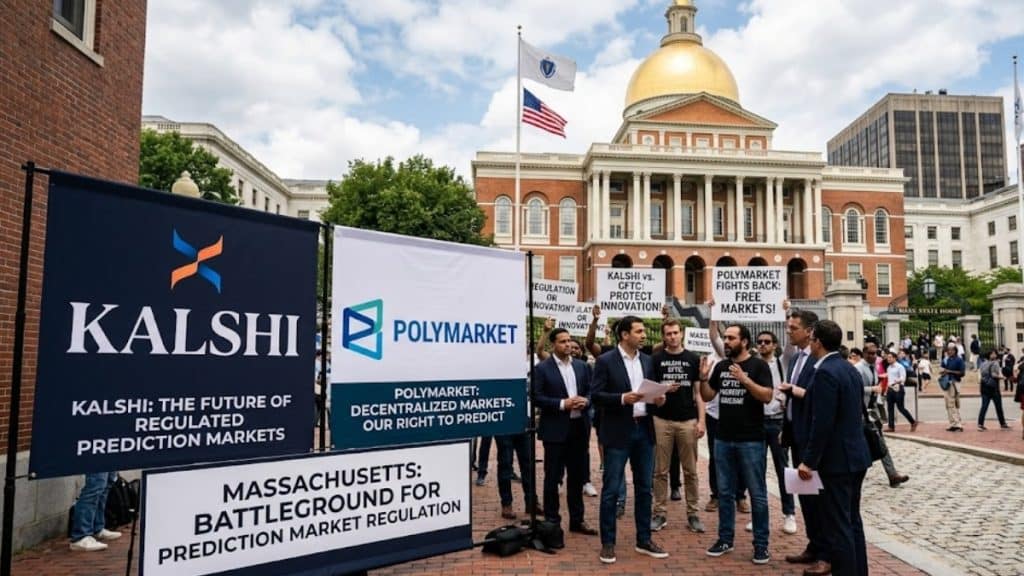
If you live in Massachusetts and you have been betting on prediction markets, pay attention. Your state is at the center of the biggest legal fight in the prediction market world. And the outcome could change how people bet across the entire country.
Massachusetts is not the only state facing major gambling debates right now, as the fight over Texas sports betting expansion in 2026 shows how states across the country are taking very different approaches to online wagering and prediction markets.
Here is what is happening and why it matters to you.
The Massachusetts AG Takes on Kalshi
Massachusetts Attorney General Andrea Joy Campbell fired the first shot. She filed a lawsuit against Kalshi in Suffolk Superior Court. Her argument is straightforward. She says Kalshi is running unlicensed sports betting operations in Massachusetts.
That is a bold claim. Kalshi says it is not a sportsbook. It is a prediction market regulated by the federal CFTC. But Massachusetts is not buying it.
In February 2026, a Massachusetts judge sided with the state. The judge banned Kalshi from offering sports-event contracts to Massachusetts residents for 30 days. According to Reuters, this was the first time a court rejected Kalshi’s argument that federal rules should override state gambling laws.
That decision sent shockwaves through the prediction market industry. If one state can ban Kalshi, others can follow.
Massachusetts Man Sues Kalshi in Class Action
The legal problems got worse for Kalshi in late April. According to the Boston Globe, a man from Raynham, Massachusetts filed a class-action lawsuit on April 29. He says he lost thousands of dollars on Kalshi sports bets.
His argument is simple. If Kalshi was running illegal gambling in Massachusetts, then every bet placed by a Massachusetts resident was unlawful. He wants his money back. And he wants it back for everyone else who lost money too.
WCVB reported that the complaint accuses Kalshi of “unlawful conduct” by offering gambling to Massachusetts residents without a state license. This is a different kind of threat for Kalshi. The AG lawsuit could shut them down in the state. The class action could cost them millions in refunds.
The Supreme Judicial Court Gets Involved
Here is where it gets really interesting. The Massachusetts Supreme Judicial Court — the highest court in the state — is now weighing in on the key question. Are Kalshi’s sports contracts “swaps” or “bets”?
According to WWLP’s coverage, the judges grilled attorneys from both sides. If the court decides these contracts are swaps, they fall under federal financial regulation. Kalshi wins. If the court decides they are bets, Massachusetts gambling laws apply. Kalshi loses.
This is not just a Massachusetts question. Whatever this court decides will influence how other states approach prediction markets. Every AG office in the country is watching this case.
Polymarket Fights Back Too
Kalshi is not the only platform fighting Massachusetts. Polymarket filed its own lawsuit against AG Campbell in federal court. According to Yahoo Finance, Polymarket is trying to get ahead of the same crackdown that hit Kalshi.
Polymarket operates differently from Kalshi. It runs on cryptocurrency and has historically operated outside the traditional regulatory framework. But Massachusetts is saying that does not matter. If you are offering bets to people in the state, you need a license.
This two-front legal battle makes Massachusetts the most important state for prediction market regulation right now.
What This Means for Massachusetts Bettors
If you are a bettor in Massachusetts, here is the practical impact:
Right now, Kalshi cannot offer sports-event contracts to Massachusetts residents. The court ban is in effect. If you try to access sports prediction markets on Kalshi from Massachusetts, you should not be able to.
For traditional sports betting, Massachusetts has a fully legal and regulated market. You can bet on sports through licensed platforms like DraftKings and FanDuel, both of which have strong roots in the Boston area. DraftKings is literally headquartered in Boston.
If you prefer offshore options, platforms like Bovada, BetOnline, and MyBookie are popular choices in Massachusetts. These platforms offer competitive odds on tonight’s NBA Playoff games and the full MLB slate.
BetUS and Everygame also serve Massachusetts customers and offer solid bonuses for new sign-ups.
The Bigger Picture for Massachusetts Gambling
Massachusetts has always had a complicated relationship with gambling. The state legalized casinos relatively recently. Encore Boston Harbor opened in 2019 and has been a major revenue driver. Sports betting went live in 2023.
But the state is cautious about expanding gambling too fast. AG Campbell’s aggressive stance against prediction markets fits that pattern. Massachusetts wants to control how gambling evolves within its borders.
The prediction market fight is part of a larger question. As new forms of betting emerge — prediction markets, crypto casinos, sweepstakes platforms — how does a state keep up with regulation?
What Happens Next
The Supreme Judicial Court decision is the one to watch. That ruling will likely come in the next few months. It will set the legal standard for whether prediction markets can operate in Massachusetts.
If Kalshi loses, expect more states to follow Massachusetts’ lead. If Kalshi wins, it could open the door for prediction markets to operate more freely across the country.
Either way, Massachusetts is writing the rulebook right now. And every bettor in the state — and across the country — should be paying attention.
Responsible Gambling Reminder
Whether you bet on prediction markets or traditional sportsbooks, please gamble responsibly. Set a budget. Stick to it. And never bet more than you can afford to lose.
If you or someone you know has a gambling problem, call the National Council on Problem Gambling helpline at 1-800-522-4700. It is free, confidential, and available 24/7.
📂 Explore more: Massachusetts