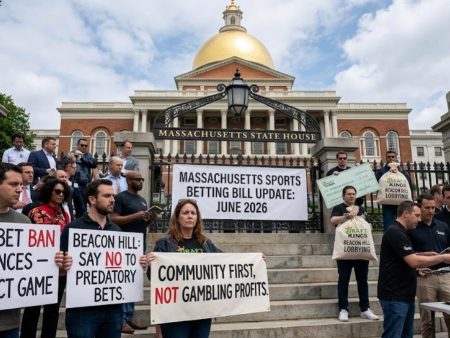

Massachusetts just did something no other state has had the guts to try. This new Massachusetts Sports Betting Bill July 2026 means that starting June 1, 2026, every licensed sportsbook in Massachusetts must notify bettors within 48 hours when their account gets limited — and explain exactly why. No more ghost limits. No more waking up to find your max bet went from $500 to $5 with zero explanation.
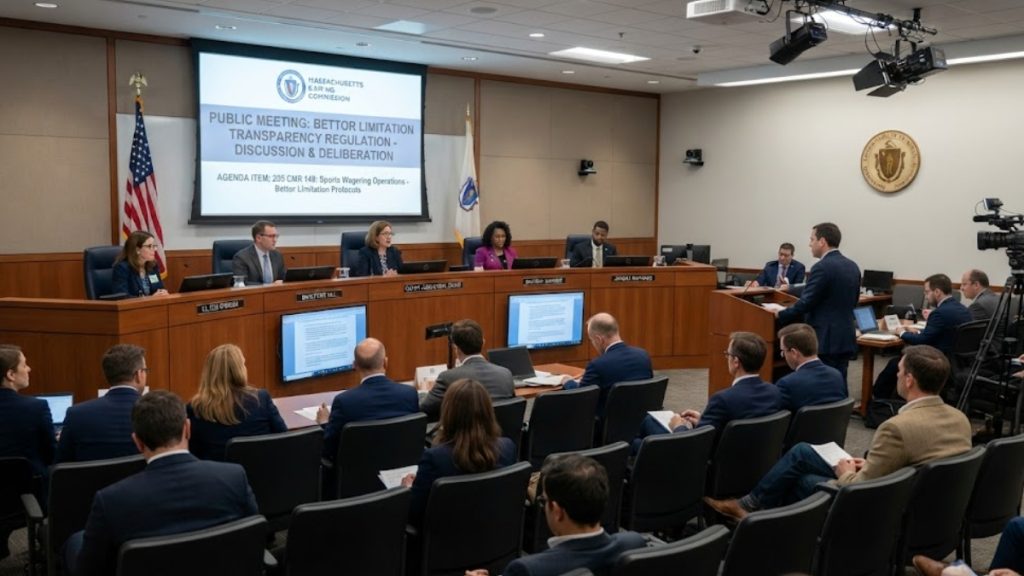
The Massachusetts Gaming Commission unanimously approved this regulation in February 2026, and it took effect last month. The early results? Mixed at best. Sportsbooks are sending notices, but some of them read like corporate lawyers wrote them at 2 a.m. after three glasses of wine.
What Does Massachusetts’s New Bettor Limitation Rule Actually Require?
Every sportsbook licensed in Massachusetts must now send a notification within 48 hours of limiting a bettor’s account. That notification has to include a specific reason for the limitation and identify which wagering markets are affected.
The rule applies retroactively too. Sportsbooks that quietly capped winning bettors before June 1 were supposed to go back and send explanations to every previously limited account.
Seven online sportsbooks operate in Massachusetts right now. All seven are subject to this rule. Massachusetts bettors wagered $678.3 million in April 2026 alone, with online platforms handling more than 98% of that volume. This is a massive market, and account limiting has been the dirtiest open secret in it.
Why Did Massachusetts Create This Rule?
Because sharp bettors have been getting screwed for years, and everyone in the industry knows it.
Here’s how it works at most sportsbooks in most states: you sign up, you bet, you win consistently, and then one day your account gets throttled. Your max bet drops. Certain markets disappear. Maybe you can only bet $10 on an NFL spread that used to accept $500. And nobody tells you why. No email. No explanation. Just silence.
I’ve talked to sharps who got limited within weeks of opening accounts. Weeks. Win a few parlays, show you actually know what you’re doing, and boom — you’re persona non grata. Every other state just shrugs and says sportsbooks can manage their own risk.
Massachusetts Gaming Commission Chair Jordan Maynard pushed for this rule because he believed it would force operators to actually examine their own limiting practices. Commissioner Paul Brodeur said operators couldn’t simply claim “business decision” and call it a day.
“I’m comfortable doing this and we’ll know pretty quickly who is making good faith efforts,” Brodeur said before the vote.
Are the Sportsbook Notifications Actually Useful?
This is where things get shaky. The notices started hitting inboxes on June 1, and Legal Sports Report reviewed several of them from different operators.
Some of the reasons cited by sportsbooks include:
- Suspected coordinated wagering
- Arbitrage betting patterns
- Exploiting latency in live markets
- General “risk management” concerns
The specificity varies wildly. Some operators like theScore Bet and Fanatics provided relatively detailed explanations. Others used language vague enough to mean almost anything. A bettor who gets told their account was limited for “wagering patterns” isn’t learning much they didn’t already suspect.
There’s no standard format required. No minimum level of detail. No independent body reviewing whether the explanations hold up. The Gaming Commission said it’s monitoring compliance and could revisit the rule if notices prove inadequate — but for now, a technically compliant notice can still be nearly useless.
How Does This Compare to Other States’ Bettor Protection Rules?
No other state has anything like this. Not one.
New Jersey has the most mature legal sports betting market on the East Coast. No limitation transparency requirement. Pennsylvania generates massive iGaming and sports wagering revenue — nothing on the books about account limiting. Colorado, Illinois, Michigan — same story across the board.
Massachusetts is the first. And the rest of the country is watching to see if it works or if sportsbooks find creative ways to comply on paper while changing nothing in practice.
We saw Illinois try to address a different bettor fairness issue — credit card betting restrictions are gaining traction in several states. But account limiting transparency? Mass stands alone on this one.
For more on how Massachusetts has been handling sports betting regulation, check our Massachusetts gambling news page.
What Should Limited Massachusetts Bettors Actually Do?
Real talk — this rule is a step forward, but it won’t get your limits lifted. Sportsbooks can still cap your account. They just have to tell you about it now.
If you get a limitation notice in Massachusetts, here’s what to do:
- Save the notification. Screenshot it. This is documentation if the Gaming Commission ever strengthens the rule or opens a complaint process.
- File a complaint with the MGC if you believe the limitation is unfair or the explanation is inadequate. The Commission has indicated it’s tracking patterns.
- Diversify your action. If one book limits you, spread your bets across multiple platforms. Massachusetts has seven licensed options.
- Consider offshore books. Sites like Bovada, BetOnline, MyBookie, and BetUS don’t limit winning bettors the same way regulated books do. That’s not an accident — offshore books make money by balancing their books, not by kicking out sharps. We’ve covered this in our BetUS review and MyBookie breakdown.
Is This Rule Going to Spread to Other States?
Probably. But not fast.
Several state gaming commissions have been fielding bettor complaints about account limiting for years. The problem is that sportsbook operators lobby hard against transparency requirements. They argue that limiting is a standard risk management tool and that disclosing their criteria would help bettors game the system.
That argument has held in most states — until Massachusetts called the bluff. If the MGC rule produces real results — fewer arbitrary limits, better bettor retention, cleaner market — other states will copy it. New Jersey and Pennsylvania are the most likely candidates.
But don’t hold your breath for 2026. Legislative calendars move slow, and gambling regulation moves slower. We’re tracking this across all the states we cover — follow the regulatory news hub for updates.
What’s the Current State of Sports Betting in Massachusetts?
Massachusetts legalized sports betting in August 2023. Retail launched in January 2023 at Encore Boston Harbor, Plainridge Park Casino, and MGM Springfield. Online launched in March 2023.
The market has been a cash machine. April 2026 handle: $678.3 million. The World Cup happening right now in the US, Canada, and Mexico is pushing those numbers even higher through June and July.
Seven licensed online operators: the major regulated books are all present. The market is competitive, which is good for bettors — sign-up bonuses, odds boosts, and promotional offers remain aggressive.
Online casinos are also legal in Massachusetts as of 2024. The state runs a full-featured regulated gambling market. For people in Mass, the legal options are solid. The limiting issue is the one black mark on what’s otherwise been a well-run rollout.
What to Watch Next in Massachusetts Betting Regulation
Three things on the radar:
- How the Gaming Commission responds to vague notices. If operators skate by with generic explanations and nothing changes, the rule is toothless. The MGC’s enforcement posture over the next 3-6 months will determine whether this was groundbreaking or performative.
- World Cup revenue impact. Massachusetts is positioned for a massive handle spike during the 2026 World Cup. Watch July and August numbers.
- Whether other states follow suit. If Massachusetts can prove this works, the dominoes start falling.
My honest take? This rule is about damn time. Every bettor who’s ever been ghost-limited knows how frustrating it is. Massachusetts at least acknowledged the problem. The execution is imperfect — those vague notifications need teeth. But the precedent matters. Sportsbooks have gotten away with silently punishing winning bettors for years. One state finally said “enough” out loud.
📂 Explore more: Massachusetts