
A key number is a final-score margin that NFL games land on much more often than any other, and the two biggest are 3 and 7. Understanding the importance of the Key Number in NFL Betting can help you make smarter picks. If the point spread — the handicap a sportsbook uses to even out a game — sits on or right beside one of those numbers, your odds of winning, pushing, or losing shift in a real way.
Key Takeaways
- A key number is a common winning margin. Three points is the most common of all, showing up in roughly 15% of NFL games, and seven appears in about 9%, according to Covers’ key-numbers study updated August 25, 2025.
- Three and seven exist because of how football scores: a field goal is 3 points, and a touchdown plus the kick after it is 7.
- Ten and 14 matter on bigger spreads. Six and eight became slightly more common after the NFL moved the extra-point kick back in 2015.
- Getting a spread of -2.5 instead of -3 can be worth paying for. Paying too much for it is not. The math is below.
- Totals do not have hard key numbers. They have soft ranges, so half points there are worth far less.
What Does “Key Number” Actually Mean?
A key number is a margin of victory that repeats. Nothing more mystical than that.
Say the Seahawks beat the Patriots 24-21. That is a three-point game. Scores like that pile up because football hands out points in chunks of 3 and 7, not one at a time. So the gap between the two teams keeps landing on the same handful of numbers.
Why should a first-time bettor care? Because sportsbooks set the spread near those margins on purpose. A spread of -3 means your team must win by 4 or more for you to collect. Win by exactly 3 and the bet is a push — a tie, where you get your stake back and nothing else. Lose the game and the ticket is dead.
Why Do 3 and 7 Show Up So Often?
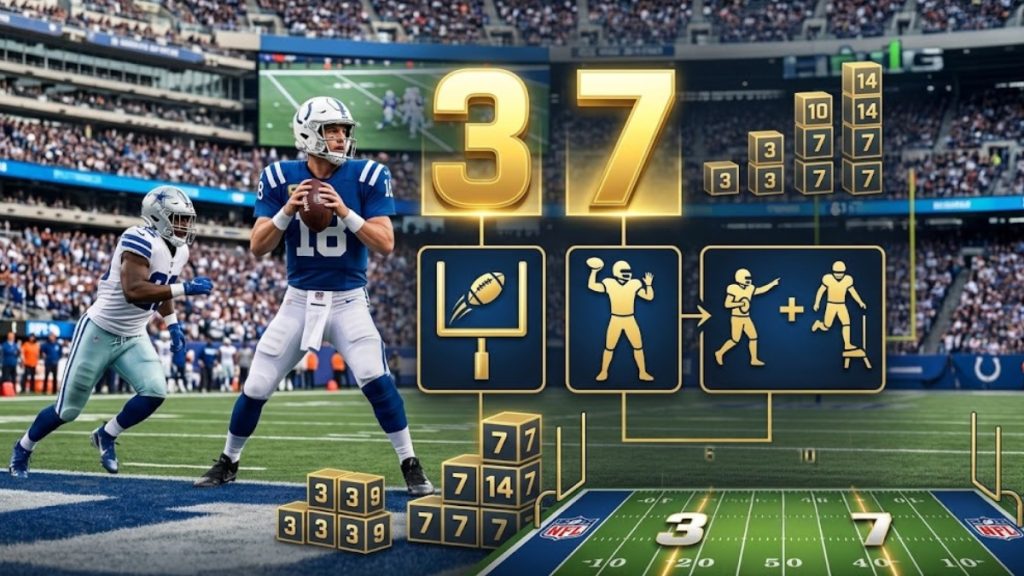
The scoring system does it. A field goal is worth 3 points. A touchdown is 6, and the kick right after it is 1 more, so the standard scoring drive is 7.
Stack those two building blocks and you get the whole list. One field goal is 3. One touchdown with the kick is 7. A field goal on top of that touchdown is 10. Two full touchdowns is 14.
That is why Covers found three-point margins in about 15% of games and seven-point margins in about 9%. Every other one-score margin sits below those two.
Which NFL Key Numbers Matter Most?
Frequencies above come from Covers’ margin study of the nine seasons before and after the 2015 extra-point change. Treat 3 and 7 as the two you check every single time. Treat 10 and 14 as the ones that decide bets on double-digit favorites.
Did the 2015 Extra-Point Rule Change Break Key Numbers?
No. It dented them.
Before the 2015 season, the extra-point kick was a 20-yard chip shot and teams made 99.2% of them from 2006 through 2014. The NFL moved the attempt back to a 33-yard try. Conversion dropped to 94.1% across 2015 through 2023, and teams also started going for two more often, kicking after just 90.7% of touchdowns instead of 95.2%.
The result: six- and eight-point finishes picked up a combined 2.4 percentage points, and five-point games rose about 1.4 points. Three and seven still lead by a wide margin. Covers’ own conclusion after nine seasons of post-change data is that the traditional key numbers remain dominant.
How Much Is a Half Point Off 3 Really Worth?
Here is DWZ editorial analysis, not a promise. Run the arithmetic before you pay for a half point.
Standard NFL spread pricing is -110, meaning you risk $110 to win $100. Break-even win rate at that price is 110 divided by 210, or 52.4%. If a sportsbook lets you move from -3 to -2.5 but charges -130, you risk $130 to win $100, and break-even climbs to 130 divided by 230, or 56.5%. That extra price costs you roughly 4.1 percentage points of required accuracy.
Now the other side of the trade. A three-point margin lands in about 15% of games, and that splits between the two teams, so your specific side winning by exactly 3 is worth somewhere near 7 to 8 percentage points. Moving to -2.5 converts those push results into wins.
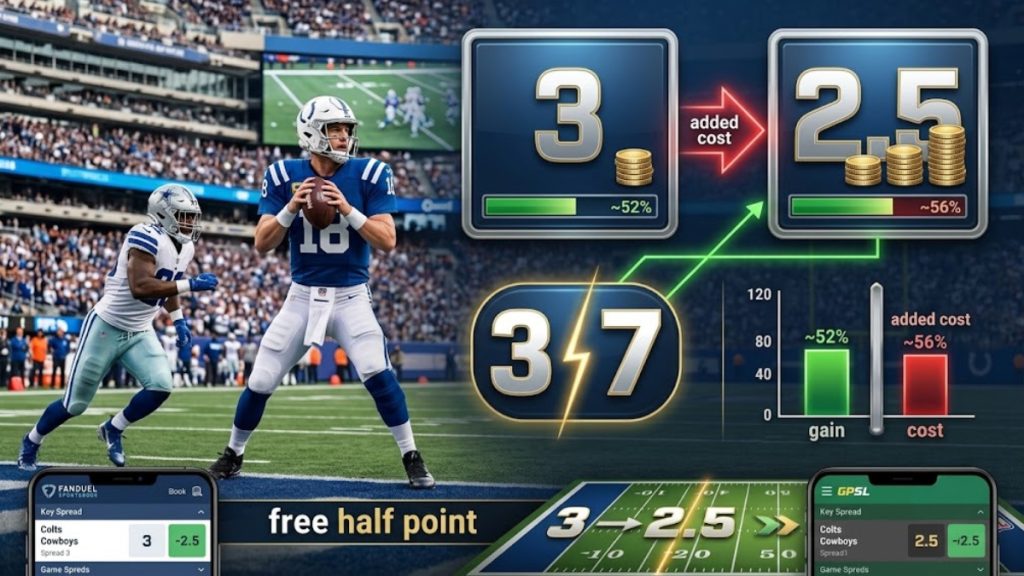
Roughly 7.5 points of gained outcomes against 4.1 points of added cost is a fair trade when the line sits exactly on 3. Move the same half point from -7.5 to -7 and the math still favors you, though by less. Buy a half point off a spread of -5 at -130 and you are paying key-number prices for a margin that is not a key number.
One more habit worth building: compare how two offshore books price the same game before you commit. When Bovada posts -3 and BetOnline or MyBookie posts -2.5 at the same price, take the -2.5. That half point is free, and free is better than bought.
Do Key Numbers Work the Same Way for Totals?
They do not, and this is where new bettors waste money. A total is the combined score of both teams, and you bet whether the real total goes over or under the posted figure.
Covers’ data shows the most common single total lands only about 4% of the time. Compare that to 15% for a three-point margin. So totals have soft ranges rather than hard numbers — clusters like 36-37, 39-41, 43-51, and 54-55 over the 2014 through 2023 seasons.
Practical version: prefer a number above the busy range when you bet the under, and below it when you bet the over. Do not pay heavy juice — the fee baked into the odds — to shift a total by half a point. The payoff is not there.
How Should a New Bettor Use Key Numbers?
Four steps, in order.
- Look at where the spread sits. On 3 or 7 means the number is doing real work.
- Check two or three sportsbooks for the same game. A better number at the same price is the cheapest edge in betting.
- Decide before you click whether a half point is worth the extra price. Use the break-even math above.
- Skip the buy entirely on totals and on spreads that are nowhere near a key number.
If any of the terms here felt new, start with our NFL betting guide for beginners, then read how a moneyline bet pays out so you can tell the difference between betting a margin and betting a winner. Season-long numbers move for different reasons, which we break down in our guide to NFL win-total line movement.
The 2026 regular season opens September 9, 2026, per the NFL’s published Week 1 schedule. Spreads for those games will sit on 3 and 7 constantly. Knowing what those numbers mean before kickoff is worth more than any pick.
References
- Covers — Examining NFL Key Numbers for the 2025-26 Season (updated August 25, 2025)
- NFL Football Operations — The Rules of Football
- FiveThirtyEight — When To Go For 2, For Real
- NFL 2026 Week 1 schedule
📂 Explore more: Sports Betting Reviews
Related Reading
- Browse All Gambling Guides
- Offshore Sportsbooks That Accept Players from Texas
- How the MLB Wild Card Works — Baseball’s Expanded Playoffs Explained
- What Do NFL Betting Odds Mean and How Do You Read Them?
More in Gambling Guides