
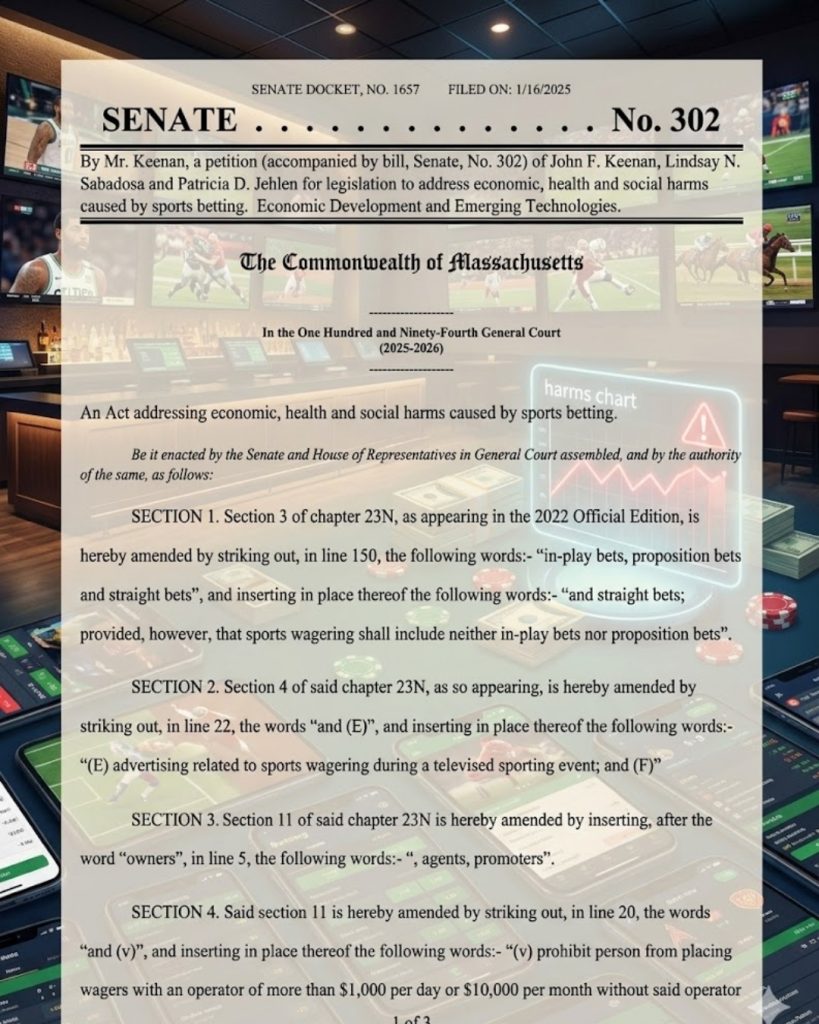
Massachusetts just shook up its sports betting market. On April 9, the Massachusetts Gaming Commission (MGC) voted 5-0 to reopen the sports betting licensing process for the first time since the market launched in 2023. The reason? British sportsbook giant bet365 wants in. This development comes as policymakers continue to discuss Massachusetts Senate Bill 302 and its implications for the industry.
At the same time, lawmakers are pushing Senate Bill 302, which would more than double the tax rate on sports betting revenue. And the state just killed an online casino legalization bill for this session.
Massachusetts lawmakers are still debating major changes to the betting market, and you can read a full breakdown of the latest developments in this detailed update on the Massachusetts sports betting bill 2026 update. There’s a lot happening in the Bay State right now. Let me break it all down.
Why Did Massachusetts Reopen Sports Betting Licensing?
bet365, one of the biggest sportsbook operators in the world, sent a formal letter to the Massachusetts Gaming Commission asking to apply for a license. The company wants a Category 3 “untethered” license. That means it could offer online betting statewide without needing a physical casino or racetrack partner.
The commission voted unanimously to reopen the application process. Deputy General Counsel Justin Stempeck told commissioners that bet365 had been in talks with staff for a while before sending the formal request.
Here’s what a Category 3 license costs:
- Application fee: $200,000
- License fee (if awarded): $5 million
- License term: 5 years
Four untethered Category 3 license slots are still open. Massachusetts law allows up to seven untethered mobile licenses total. Only three have been filled so far.
Who Already Holds a License in Massachusetts Sports Betting Market?
Massachusetts currently has seven licensed sports betting operators:
Untethered (Category 3) licenses:
- DraftKings
- FanDuel
- Bally Bet
Tethered licenses (connected to physical locations):
- BetMGM
- Caesars
- Fanatics
- PENN Interactive (theScore Bet)
The total breakdown allows for 16 mobile licenses: six tied to casinos, three to racetracks, and seven untethered. There’s plenty of room for new operators.
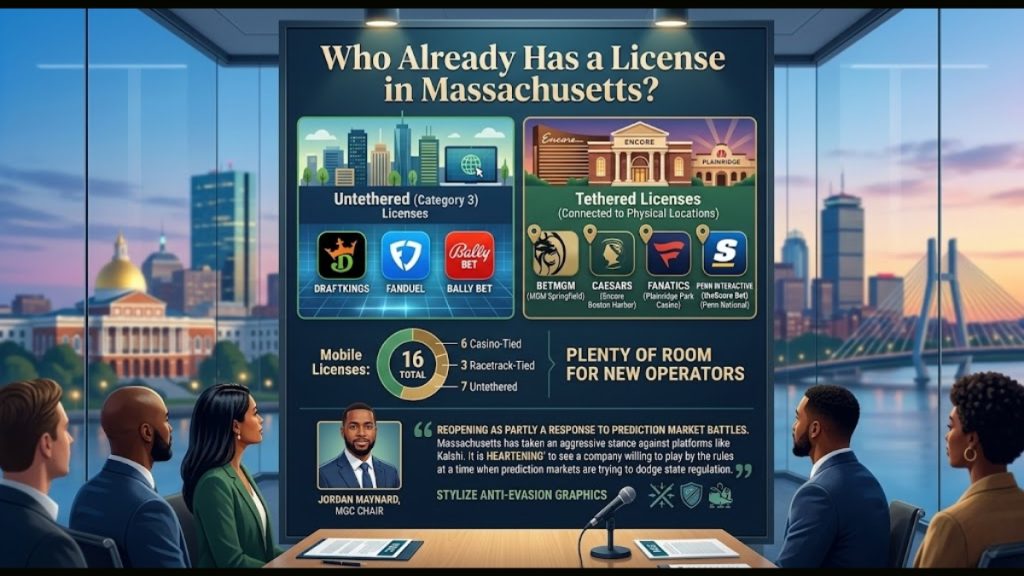
MGC Chair Jordan Maynard framed the reopening as partly a response to the prediction market battle happening across the country. Massachusetts has taken an aggressive stance against platforms like Kalshi. Maynard said it was “heartening” to see a company willing to play by the rules at a time when prediction markets are trying to dodge state regulation.
Is bet365 Guaranteed to Get a License?
No. The commission directed staff to develop a timeline for accepting applications. They’ll also issue a formal Notice of Intent to see if other operators are interested. If more companies apply than there are open slots, the state would need to create a competitive evaluation process. That process doesn’t exist yet.
Commissioner Eileen O’Brien raised a fair concern. She wanted an economic analysis done first. She worried about adding new operators to a potentially crowded market. Commissioner Nakisha Skinner took the opposite view, saying the door should be open to anyone who wants to apply.
bet365 already operates in 16 U.S. states, including Illinois, New Jersey, Ohio, Pennsylvania, and Missouri. The company has been eyeing Massachusetts for years. It almost partnered with Raynham Park before the state launched legal betting, but that deal fell apart.
What Is Senate Bill 302?
While the licensing news grabbed headlines, there’s another story brewing in Massachusetts. Senate Bill 302 would make three major changes to sports betting in the state:
- Raise the tax rate from 20% to 51% — That’s a massive jump. It would put Massachusetts among the highest-taxed sports betting states in the country.
- Ban live in-play betting — No more betting on games while they’re happening.
- Restrict certain advertising — Tighter rules on how sportsbooks can market to consumers.
The bill was proposed in late March. It hasn’t advanced out of committee yet, but it’s worth watching closely. A 51% tax rate would be brutal for operators. For comparison, New York charges 51% and it’s been controversial there. Some operators say the high rate makes it hard to turn a profit.
For bettors, a higher tax rate could mean worse odds. Sportsbooks might offer less competitive lines to protect their margins. It could also mean fewer bonuses and promotions.
What Happened to Online Casino Legalization in Massachusetts?
Dead. At least for now.
Massachusetts lawmakers voted 11-0 to shelve iGaming bill H.4431 in March 2026. The bill would have legalized online casino games like slots, blackjack, and roulette. The sponsor plans to refile for the 2027-2028 session.
This isn’t surprising. Online casino legalization has been a tough sell in most states. Only a handful — New Jersey, Michigan, Pennsylvania, Connecticut, West Virginia, Delaware, and Rhode Island — have legal iGaming. Massachusetts isn’t ready to join that list yet.
Is Sports Betting Legal in Massachusetts Right Now?
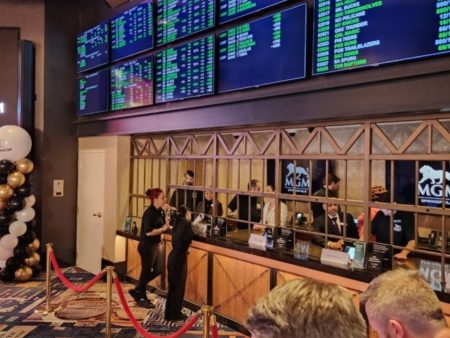
Yes. Massachusetts has had legal sports betting since early 2023. You can bet online through any of the seven licensed operators or visit physical sportsbooks at casinos and racetracks.
Here’s the current legal landscape:
- Legal: Online sports betting, retail sports betting
- Legal: Daily fantasy sports (DraftKings, FanDuel)
- Not legal: Online casino games (slots, table games, poker)
- Not legal: Prediction markets (state has injunction against Kalshi)
The state has collected about $425 million in total taxes from sports betting operations since launch. That’s real money going to state programs.
How Does Massachusetts Compare to Neighboring States?
Massachusetts is in a competitive Northeast market:
- New York: Huge market but 51% tax rate squeezes operators. Nine online sportsbooks.
- Connecticut: Tribal-run market with FanDuel and DraftKings. Online casino games are legal too.
- New Jersey: The gold standard. Full sports betting and iGaming since 2018.
- Rhode Island: Legal sports betting and recently launched iGaming.
- New Hampshire: DraftKings holds the exclusive online license.
- Vermont: Just launched sports betting in 2024.
Adding bet365 would give Massachusetts bettors more choices. More competition usually means better odds and better promotions for you. That’s a good thing.
Where Can Massachusetts Residents Bet Right Now?
Massachusetts residents have plenty of legal, regulated options:
Regulated sportsbooks:
- DraftKings
- FanDuel
- BetMGM
- Caesars
- Fanatics
- Bally Bet
- theScore Bet
Retail locations:
- Encore Boston Harbor
- MGM Springfield
- Plainridge Park Casino
- Suffolk Downs (temporary)
If you want even more options or want to try platforms not yet available in Massachusetts, offshore sportsbooks also accept action from Bay State residents:
- Bovada — Great for live betting and a wide range of markets
- BetUS — Known for generous welcome bonuses
- MyBookie — Strong prop bet selection
- BetOnline — One of the most established offshore books
- TheOnlineCasino — Good for casino games that aren’t legal in Massachusetts yet
- BetNow — Simple, straightforward betting experience
- Everygame — Reliable with decades of history
The regulated market in Massachusetts is solid. But having alternatives never hurts, especially for casino-style games that the state hasn’t legalized.
What Should You Watch Next?
Here’s my watchlist for Massachusetts:
- bet365 application timeline — The MGC needs to set dates. This could take weeks or months.
- Other operators applying — Will anyone else step up for those four open slots?
- Senate Bill 302 progress — If the 51% tax rate passes, it changes everything for operators and bettors.
- Prediction market legal battles — Massachusetts is fighting Kalshi in court. The outcome could affect the broader market.
- iGaming refiling — Online casino legalization will come back. It’s just a matter of when.
The Big Picture
Massachusetts is doing something smart here. By reopening licensing, the state is signaling that it wants a competitive, well-regulated market. More operators means more choices for bettors. More competition means better lines and better promos.
But the 51% tax proposal is a red flag. If that passes, it could drive operators away rather than attract them. There’s a balancing act between maximizing state revenue and keeping the market healthy. New York’s experience shows what happens when you tax too aggressively — operators struggle, and some of that activity goes back to the black market.
I’m cautiously optimistic about Massachusetts. The bet365 news is positive. The licensing process is smart. But I’ll be watching SB 302 very closely. A 51% tax rate would be a gut punch to an otherwise well-run market.
Responsible Gambling
Sports betting should be entertainment, not a source of stress. If gambling stops being fun or starts causing problems, please reach out for help.
National Council on Problem Gambling Hotline: 1-800-522-4700
You can also text or chat at www.ncpgambling.org. Help is free, confidential, and available 24/7.
📂 Explore more: Massachusetts