
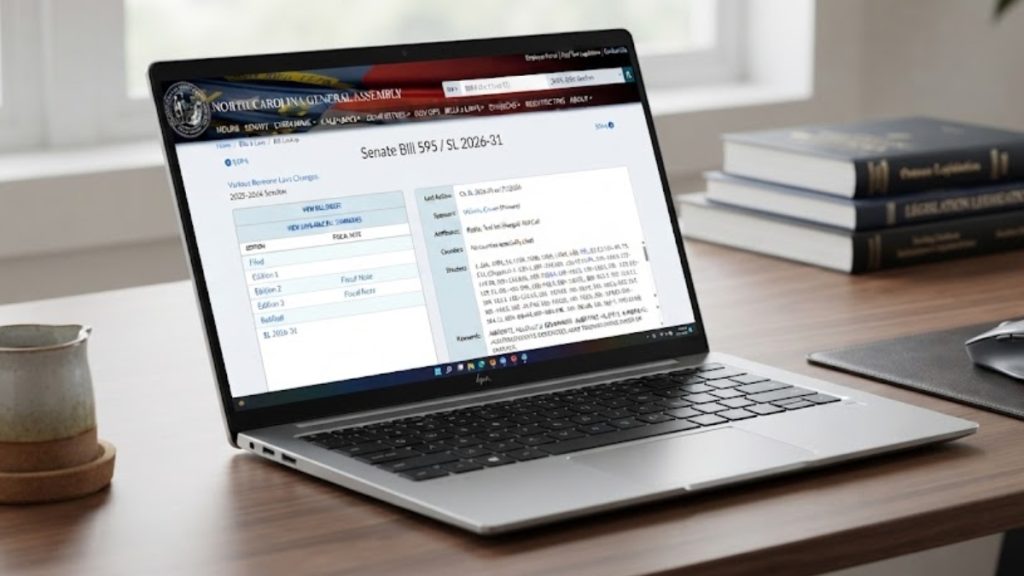
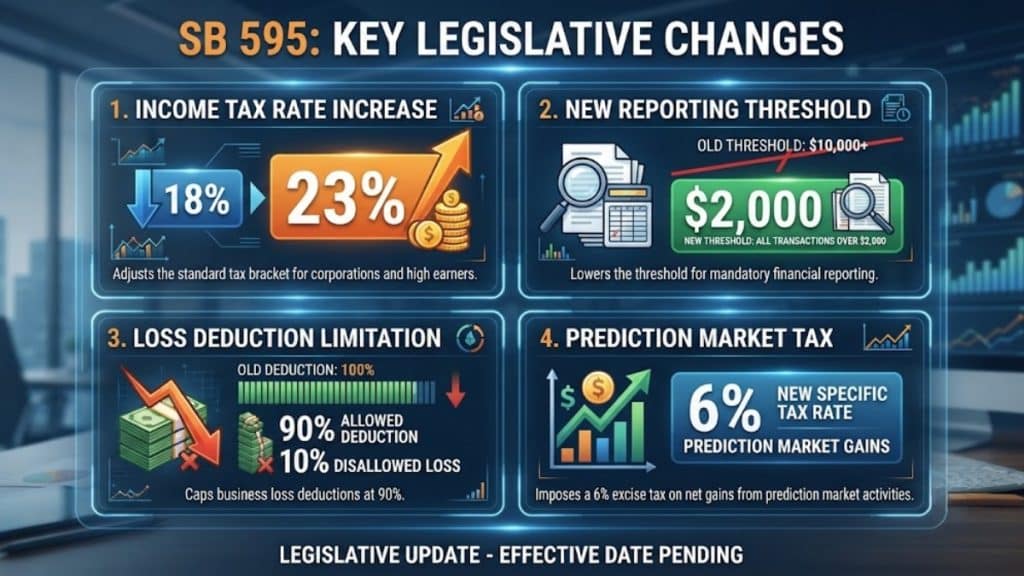
North Carolina just made legal sports betting more expensive for operators — and that cost is rolling downhill straight to bettors. Gov. Josh Stein signed Senate Bill 595 on July 2, 2026, hiking the operator tax rate from 18% to 23% on gross wagering revenue and introducing a $2,000 annual reporting threshold that gives the state direct access to your betting history at licensed sportsbooks.
The Quick Version
- NC’s operator tax jumped from 18% to 23% as of July 1, 2026, under SB 595 signed by Gov. Josh Stein on July 2
- $2K reporting threshold is new. Licensed operators must now hand over detailed wagering data for anyone with $2,000+ in annual gross winnings
- Loss deductions are finally allowed — up to 90%, retroactive to January 1, 2025. NC previously allowed zero gambling loss deductions on state taxes
- Prediction markets taxed at 6% starting January 1, 2027
- Offshore sportsbooks don’t report to NC tax authorities. The $2K data sharing applies only to regulated operators.
How Much Did North Carolina Raise Its Sports Betting Tax?
The tax on gross wagering revenue jumped 5 percentage points — from 18% to 23% — effective July 1, 2026. NC has collected roughly $300 million from operators since legal online betting launched in March 2024, per state revenue data. May 2026 handle alone topped $561 million.
Original proposals went as high as 50%. Legislators wanted 36%, operators wanted to stay at 18%, and 23% was the political compromise that nobody loved. I tracked this bill through three committee hearings in Raleigh, and the final number surprised exactly zero people who’d been watching the back-and-forth.
SB 595 also redefined gross wagering revenue to include the cash value of promotional and bonus dollars. Operators can’t use promo credits to shrink their taxable revenue anymore — they’re getting hit with a higher rate AND a broader tax base. Bottom line: expect fewer sign-up bonuses and tighter odds at regulated NC sportsbooks within 90 days.
What Is the $2,000 Bettor Reporting Threshold in NC?
This is the change that should actually worry NC bettors using licensed books. SB 595 authorizes the NC Secretary of Revenue to request detailed player data from any licensed operator for bettors with $2,000 or more in annual gross winnings.
That data includes your name, address, tax ID, and your complete wager history.
Before SB 595, North Carolina relied on self-reporting. Bettors were supposed to declare winnings on state taxes, and most… didn’t. Now there’s a cross-referencing mechanism. The Secretary of Revenue can pull your records directly and compare them against your filing.
Two grand isn’t a high bar. Betting NFL at $50 a pop and running even marginally hot for a few months gets you there. And it’s gross winnings — not net profit. You could be down $5,000 overall and still trigger the threshold.
The offshore distinction matters here. Bovada, BetOnline, and MyBookie do not report to the NC Secretary of Revenue. They’re not licensed NC operators, so the $2K threshold and automatic data sharing don’t apply. Check our BetUS honest review if you’re weighing your options. The enforcement asymmetry between regulated and offshore books is real, and SB 595 just made it wider.
Can North Carolina Bettors Finally Deduct Gambling Losses?
Yes — and this is genuinely good news that most coverage has buried. SB 595 allows NC bettors to deduct gambling losses against winnings up to 90% on state income taxes, retroactive to January 1, 2025.
NC previously allowed zero gambling loss deductions at the state level. None. You could lose $20,000 and win $21,000, and NC taxed you on the full $21K. Absolute hell.
That’s an $850 difference on a bettor who’s barely profitable. The 90% cap mirrors the federal standard under the “One Big Beautiful Bill,” but at the state level, this is brand new for NC. File amended returns if you’ve been paying on gross winnings since January 2025 — you might be owed money.
The deduction applies to all gambling winnings reported on state taxes, regardless of where you bet. Worth knowing.
How Does the Prediction Market Tax Work Under SB 595?
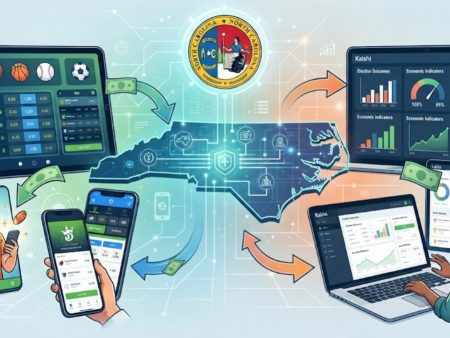
SB 595 introduces a 6% tax on “net trading fee” revenue for prediction market operators, effective January 1, 2027. CFTC-registered platforms like Kalshi can operate in NC without a separate state license — a smarter approach than Nevada or Massachusetts, which have tried to shut prediction markets down entirely.
But 6% on net trading fees squeezes already-thin margins. Expect wider spreads on contracts or reduced market liquidity in NC.
Offshore prediction markets don’t collect or remit the 6% tax. For active contract traders, the offshore version just got a price advantage that didn’t exist before SB 595. That’s not editorial spin — it’s math.
Should NC Bettors Consider Offshore Sportsbooks After SB 595?
Look — SB 595 makes the case for offshore betting stronger than it was a week ago. Regulated NC sportsbooks now carry a 23% tax burden, automatic reporting at $2K, and a redefined GWR that captures promo value. Offshore books carry none of that.
Bovada still processes crypto payouts in under 24 hours for most NC users. BetOnline offers reduced juice on NFL sides. And our MyBookie review covers reload bonuses that regulated NC books are about to start slashing.
The cryptocurrency betting angle shifts the reporting dynamics even further. Crypto transactions at offshore books don’t generate the automatic state-level paper trail that licensed operator transactions do.
We saw this exact pattern play out in Illinois when they restructured their tax brackets — promo restrictions backfiring and bettors moving to offshore platforms. NC legislators literally heard the AGA make this argument during hearings. They passed the bill anyway.
For the full picture on every state bill we’re tracking, hit our gambling legislation tracker. NC’s SB 595 is the most consequential piece of state betting legislation since Illinois went progressive — and NC bettors damn well need to pay attention.
📂 Explore more: North Carolina