

Yes — every single dollar you win betting with crypto is taxable income in the United States, and it doesn’t matter if your sportsbook sends you a tax form or not. If you’re getting started with Crypto Sports Betting, especially if you’re learning how to deposit Bitcoin on Bovada, it’s important to understand that the IRS treats crypto gambling winnings the same as a W-2 paycheck, and the new 2026 rules just made things worse for anyone who bets offshore.
The Quick Version
- All crypto betting winnings are taxable — the IRS says you owe federal income tax on gambling winnings whether or not a sportsbook sends a W-2G or 1099, per IRS Topic No. 419.
- The One Big Beautiful Bill Act (signed July 4, 2025) raised the W-2G reporting threshold to $2,000 and capped gambling loss deductions at 90% starting January 1, 2026.
- Offshore books like Bovada and BetOnline don’t send tax forms — but that doesn’t erase the tax bill. You still owe.
- Crypto adds a second tax layer — converting Bitcoin to USD when you deposit is a separate capital gains event under IRS Notice 2014-21.
- A break-even year can now create a tax bill — the 90% loss cap means a bettor who wins $10,000 and loses $10,000 still owes taxes on $1,000 of “phantom income.”

Are Crypto Sports Betting Winnings Taxable?
Yes. Full stop. The IRS treats gambling winnings as ordinary income under IRC Section 61, and that includes every winning bet placed with Bitcoin, Ethereum, USDT, or any other crypto. Doesn’t matter how you fund the bet — cash, card, or crypto — per IRS guidance on virtual currency transactions updated March 2024.
I deposited $300 in Bitcoin on Bovada last month to bet an NBA Finals prop. Hit it for $840. That $540 profit? Taxable. Even though Bovada never sent me a single piece of paper.
Your tax rate depends on your total income. Gambling winnings stack on top of salary, freelance work, crypto gains — all taxed at your marginal rate. For most bettors, that’s 12-24% federally per 2026 brackets. My $540 win at 22% costs about $119 in federal tax alone.
The taxable event is the winning bet itself — not the withdrawal. A lot of guys think “I didn’t cash out so I don’t owe anything.” Wrong. You owed the second that bet settled.
What Changed Under the One Big Beautiful Bill Act in 2026?
Two big things changed when OBBBA took effect on January 1, 2026, and both hit crypto bettors hard.
First: the W-2G reporting threshold jumped to $2,000. Before 2026, sportsbooks had to issue a W-2G form for wins of $600 or more (at 300:1 odds or higher). Now that floor is $2,000, and it gets adjusted for inflation each year going forward. The IRS confirmed this in their December 2025 draft instructions for Form W-2G.
Sounds like good news, right? Fewer forms. Less paperwork.
Not so fast.
Second: gambling loss deductions got capped at 90%. This is the real gut punch. Before OBBBA, you could deduct 100% of your gambling losses against your winnings (you just couldn’t deduct MORE than you won). Now you can only deduct 90% of your losses.
Here’s what that actually looks like with real money:
Read that table again. A bettor who wins $50,000 and loses $50,000 — literally breaks even — still owes about $1,100 in federal income tax. That 10% you can’t deduct is gone forever. No carryforward, no workaround.
Maya Torres flagged this when the bill was being debated — she called it a “stealth tax on recreational gamblers,” and honestly, she wasn’t wrong.
Do Offshore Crypto Sportsbooks Report Your Winnings to the IRS?
No. Offshore sportsbooks like Bovada, BetOnline, MyBookie, and BetUS do not issue W-2G forms, 1099s, or any tax documents to US bettors. They operate outside US jurisdiction. No 1099-MISC, no 1099-K, nothing.
But — and I can’t stress this enough — you still legally owe taxes on every dollar you win.
The IRS doesn’t care whether you got a form. IRS Topic No. 419 is blunt about it: “You must report all gambling winnings as ‘Other Income’ on Form 1040 or Form 1040-SR, including winnings that aren’t reported on a Form W-2G.” That’s a direct quote.
Now, let’s be honest about the practical reality. Most guys betting $50 parlays on offshore books aren’t filing gambling income. The IRS knows this. You know this. I know this.
But that’s a risk calculation, not a legal defense. And the risk is shifting because of one thing: crypto exchanges.
Does Coinbase or Kraken Report Your Crypto Gambling Activity?
Here’s where it gets real for offshore bettors. Your sportsbook won’t snitch. But your crypto exchange might.
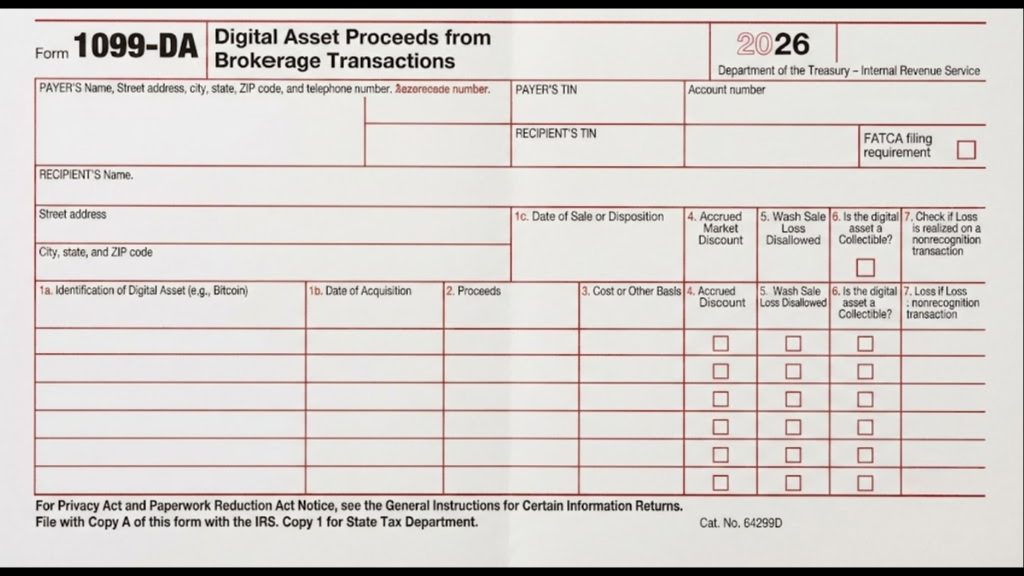
Starting in 2026, crypto brokers including Coinbase, Kraken, and Gemini are required to issue Form 1099-DA (Digital Asset) reporting proceeds from crypto sales, per final IRS regulations published in June 2024. The reporting applies to dispositions — meaning any time you sell, swap, or send crypto that results in a change of ownership.
Picture this: You buy $1,000 in Bitcoin on Coinbase. Send it to Bovada. Win. Withdraw $3,000 in BTC back to Coinbase. Sell for USD.
Coinbase sees a $3,000 sale and reports it on Form 1099-DA. You only bought $1,000 from that exchange. There’s a gap. That gap raises questions.
I talked to a tax sharp near Fremont Street in downtown Vegas — he does returns for professional bettors — and he said the exchange angle is what’s catching people now. “The sportsbook won’t report you. Your exchange will.”
The IRS also has blockchain analytics tools through contracts with companies like Chainalysis. On-chain transactions don’t disappear just because you sent crypto offshore. That’s a fact, not a scare tactic.
How Does Crypto Create a Double Tax Hit on Sports Betting?
This is the part most articles miss, and it’s the part that actually costs you money.
Converting Bitcoin into USD — or into a sportsbook deposit denominated in USD — is a separate taxable event under IRS Notice 2014-21. The IRS treats crypto as property. Selling property = capital gains tax.
Real scenario: You bought 0.05 BTC at $40,000/coin ($2,000 cost). Bitcoin hits $80,000. You deposit that 0.05 BTC (now worth $4,000) into BetOnline.
Right there — before you’ve placed a single bet — you’ve triggered a $2,000 capital gain. Short-term rate if you held the BTC less than a year. Long-term rate if you held it longer.
Then you win $1,500 betting NFL totals. That $1,500 is taxed separately as ordinary gambling income.

You now owe capital gains tax on $2,000 AND income tax on $1,500. Two layers. Same pile of money getting hit twice. It’s a damn mess.
And if Bitcoin dropped in value between when you bought it and when you deposited? You actually have a capital loss on the conversion, which you can use to offset other gains. Small consolation, but worth tracking.
Bottom line: every crypto deposit and withdrawal creates a Form 8949 reporting event, completely separate from your gambling wins and losses.
What Records Should You Keep for Crypto Betting Taxes?
If you bet with crypto on offshore books, nobody is tracking this for you. No W-2G, no annual statement, no net win/loss summary like you’d get from a regulated book in New Jersey. You’re on your own.
Here’s what I keep in a spreadsheet — dead serious, I’ve been doing this since 2023:
For every crypto deposit and withdrawal:
- Date of the transaction
- Amount of crypto sent or received (exact — down to the satoshi)
- USD value of the crypto at the time of the transaction (grab it from CoinGecko or CoinMarketCap)
- Your cost basis for that crypto (what you paid for it originally)
- The exchange or wallet you sent from / received to
For every bet:
- Date the bet was placed
- Amount wagered (in USD equivalent)
- Amount won or lost
- What the bet was (NFL Week 3, Packers -3.5, whatever)
Tools that help:
- Koinly, CoinLedger, or TokenTax for crypto transaction tracking
- A plain Google Sheet for bet logs
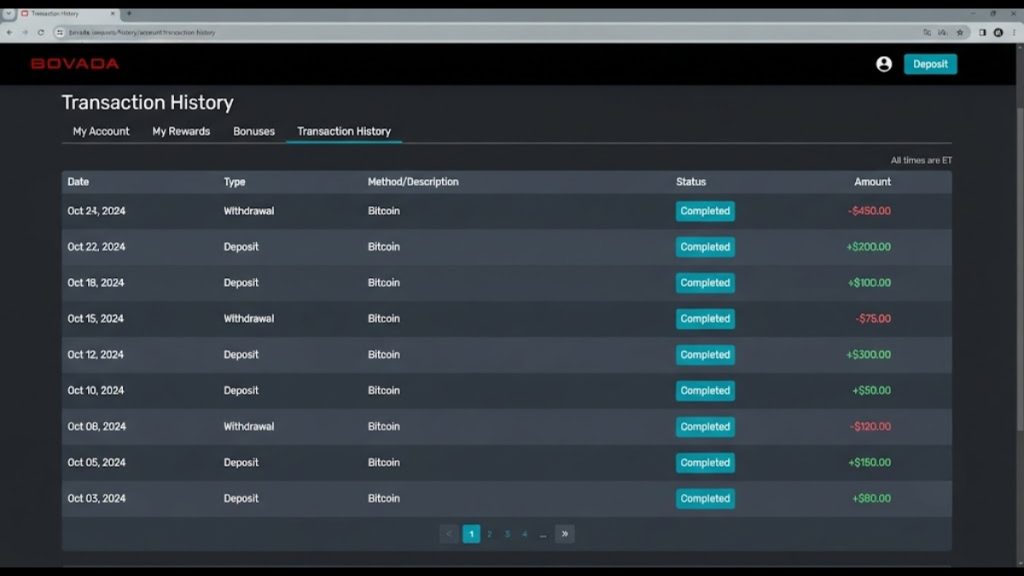
- Screenshots of your sportsbook transaction history — download these regularly because offshore books can and do wipe histories
We tested CoinLedger and Koinly side by side last year. Both connect to major exchanges and import wallet transactions. Neither auto-classifies gambling income — you tag that manually — but they handle cost basis tracking, which is the hard part.
Keep everything. No records means the IRS calculates what they think you owe, and their math is never in your favor.
Can You Deduct Crypto Sports Betting Losses in 2026?
You can — but only up to 90% of your losses, only up to the amount of your winnings, and only if you itemize deductions on Schedule A.
That last part matters more than people realize. The 2026 standard deduction is $15,000 for single filers. If your itemized deductions (gambling losses, mortgage interest, state taxes, donations) don’t top $15,000, you get zero benefit from deducting losses.
You’re single, you rent, your only real deduction is $8,000 in gambling losses. Standard deduction wins because $15,000 > $8,000. Those losses? Worthless. But your $8,000 in winnings? Still fully taxable.
That’s the ugly math for most recreational bettors. You pay tax on wins. Zero benefit from losses. The OBBBA loss cap at 90% is almost academic for people who don’t itemize — they were already getting zero deduction.
Hot take: the 90% cap mainly screws high-volume bettors and professional gamblers who actually itemize. For the average degen throwing $50 on a six-leg parlay every Saturday? The standard deduction was already blocking your loss deduction anyway. Not that it makes the law any less stupid.
Professional gamblers report on Schedule C and can deduct losses as business expenses. But the 90% cap hits them too, per the OBBBA amendment to IRC Section 165(d). Qualifying as a “pro” requires specific IRS criteria — primary income source, business-like records, significant time commitment. Most of us don’t qualify.
How Do You Actually Report Crypto Betting Winnings on Your Tax Return?
Here’s the step-by-step. And yeah, I know taxes are about as fun as watching the Jaguars play in December, but this matters.
Step 1: Report gambling winnings on Schedule 1, Line 8b (“Gambling income”) — every winning bet, even without a W-2G.
Step 2: If you itemize, report losses on Schedule A, Line 16. Multiply total losses by 0.9 for the OBBBA cap. Can’t exceed your winnings.
Step 3: Report crypto dispositions on Form 8949, summarize on Schedule D. That’s the capital gains layer.
Step 4: Answer “Yes” to the digital asset question on Form 1040, page 1. Lying is perjury.
Here’s what a $5,000 winning year might look like:
Your taxable gambling income: $5,000 minus $2,700 = $2,300 from gambling, plus $800 in crypto capital gains = $3,100 total taxable impact. At 22%, that’s about $682 in federal tax.
Not nothing. Worth knowing before you start spraying Bitcoin into every offshore book with a crypto deposit option.
What Happens if You Don’t Report Crypto Betting Income?
Not gonna tell you what to do. But here are the risks.
Back taxes plus interest (around 8% annually as of 2026) plus penalties of 20-75% of the underpaid amount. Fraud penalties top out at 75%. The IRS has three years to audit a standard return, but that jumps to six years if you omit more than 25% of gross income. For fraud? No time limit. Ever.
Chainalysis, the blockchain analytics firm under IRS contract since 2015, gives the feds on-chain visibility that didn’t exist five years ago. Audit rates for returns under $200K sit around 0.4% per IRS Data Book 2024 — low, but not zero. And the penalties are brutal if you’re the one they pick.
Talk to a CPA. Seriously.
📂 Explore more: Crypto & Payment Methods