
A same-game parlay is one bet that ties together two or more wagers from the exact same game, and it is risky because every pick must win, the sportsbook stacks extra fees into the price, and the picks are often linked in ways that make the whole ticket harder to hit than it looks. Miss one leg and you lose the entire bet.
Key Takeaways
- A same-game parlay (SGP) combines multiple bets from one game into a single ticket. Every leg must win or the whole bet loses.
- Sportsbooks add their fee, called the vig, to each leg. Stack several legs and that fee compounds, so the payout is worse than it first appears.
- SGP legs from the same game are often correlated, meaning linked. Books run them through special pricing that shortens the payout to cover that link.
- A four-leg parlay priced at -110 legs has only about an 8.5% chance to win, per RG.org. Roughly 11 of every 12 tickets lose.
- SGPs can be fun for small stakes, but they are a low-hit, high-margin bet. Treat them as entertainment, not a steady way to profit.
What Is a Same-Game Parlay, Exactly?
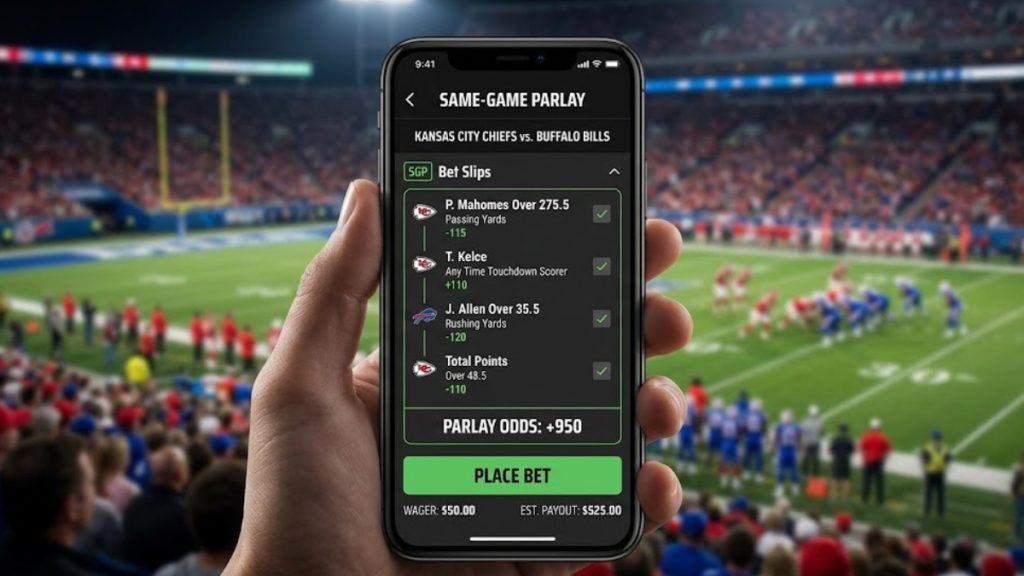
A same-game parlay is a single bet built from two or more picks inside one game. Each pick is called a “leg.” Instead of betting three different games, you bet three things about the same game — say the point spread, the total points, and a player prop.
A regular parlay pulls legs from different games. An SGP pulls them all from one. That one difference is what makes SGPs both popular and tricky, and it drives every risk below. If you are new to combined bets, start with our beginner parlay guide before you try stacking legs.
How Does a Same-Game Parlay Work?
You pick your legs from one game, add them to a single slip, and the sportsbook prices them together as one bet. The more legs you add, the bigger the potential payout climbs — and the harder the bet gets to win.
Here is a plain example of how the odds and payouts move as you add legs. This uses independent legs from separate games so you can see the fee stack cleanly. Same-game parlays are priced differently, which the next sections explain.
Sample payout comparison:
- One straight bet: -110 sample odds; a $100 stake pays $91; about a 52% implied chance to win.
- Two-leg parlay: +264 sample odds; a $100 stake pays $264; about a 27% implied chance to win.
- Four-leg parlay: +1,228 sample odds; a $100 stake pays $1,228; about an 8% implied chance to win.
- The implied chance comes straight from the odds. It is the number baked into the price, not a promise of anything.
Why Does the Whole Bet Lose If One Leg Misses?
A same-game parlay pays only if every single leg wins. One miss and the full ticket is dead. This is called settlement dependence — the result of the whole bet depends on all parts landing.
Think of it like a chain. Four legs is four links, and the chain breaks if any one link snaps. A straight bet has one link. That all-or-nothing rule is the first reason SGPs feel exciting but rarely cash.
How Does the Sportsbook’s Fee Add Up Across Legs?
Every leg carries the vig, which is the small fee a sportsbook builds into the odds to guarantee its cut. On a standard -110 bet you risk $110 to win $100, and that gap is the vig — roughly a 4.5% edge for the book on a two-sided market.
That fee does not just sit there when you parlay. It compounds. Combine two fair coin-flip legs and the true payout should be +300. Priced at -110 each, the book pays about +264 instead. The house edge on that two-leg ticket climbs to roughly 9% — about double a single bet, per the odds math used by how sportsbooks build their odds. Add more legs and the edge keeps stacking against you.
What Is Correlation, and Why Do Books Shorten Same-Game Parlay Payouts?
Correlation means two outcomes are linked, so one result makes the other more or less likely. This is the core reason a same-game parlay is not just a normal parlay from one game.
The simple “multiply the odds” math only works when legs are independent — when one result has no effect on another. Legs from the same game often are not independent. Say you bet a quarterback to throw for over 300 yards and also bet his top receiver to score a touchdown. If the passing game goes off, both cash together. That is positive correlation. Outcomes can also pull against each other, like betting a team to win while also betting the game to stay under a low total. That is negative correlation.
Because same-game legs can move together, sportsbooks do not price them with the basic parlay formula. Analysts at OddsJam and FOX Sports both note that books run SGPs through special pricing engines that shorten the payout to cover the linkage. A University of West Florida study on correlated parlay betting found books price these markets carefully to protect their margin. So the SGP payout you see is usually lower than the same legs would pay as separate bets — that trimmed payout is an extra, hidden cost. You can estimate your combined payout with our free tool before you place the wager.
How Often Do Same-Game Parlays Actually Win?
Not often. Adding legs drops your combined chance fast, because you multiply several already-uncertain outcomes together. A four-leg parlay built from -110 legs carries only about an 8.5% implied chance to win, according to RG.org — meaning close to 11 of every 12 tickets lose.
SGPs sit on the long-shot end of betting. The big payout is the bait, but the low hit rate is the reality. A player prop can miss by one yard or one catch, and each extra leg is one more way for the whole ticket to break.
Are Same-Game Parlays Ever Worth It?
They can be fine as small-stakes entertainment, but they are a poor tool for steady profit. The combined edge against you is bigger than on straight bets, and the win rate is low. Bet an amount you are okay losing outright.
If you do play them, keep the leg count low, avoid stacking picks that clearly work against each other, and set a firm budget first. Two or three legs give you a better shot than a six-leg long shot with a flashy payout.
Where Do You Get the Best Same-Game Parlay Value?
Look for books that price SGPs fairly and post the odds before you confirm. Offshore sportsbooks such as Bovada and BetOnline both offer same-game parlays across the NFL, NBA, MLB, and other major U.S. markets, and both let U.S. bettors fund accounts with crypto or cards.
Compare the same SGP at more than one book before you bet — shortened payouts vary, and a few points of odds add up over time. Our Bovada review and the BetOnline breakdown walk through how each site handles parlays, payouts, and deposits.
References
- University of West Florida — Correlated Parlay Betting: An Analysis of Betting Market Profitability
- FOX Sports — What Is a Same Game Parlay? How SGPs Work, Odds & Strategy
- RG.org — Parlay Betting: How to Place Parlays & Boost Payouts in 2026
- OddsJam — What Is a Same-Game Parlay?
- OpticOdds — Correlation in Same Game Parlays: How Sportsbooks Are Tackling It
📂 Explore more: Sports Betting Reviews
Related Reading
- Browse All Sports Betting Reviews
- How Does MLB Run Line Betting Work?
- How to Bet on the NFL: A Beginner’s Guide for 2026
- What Are NFL Player Props and How Do Depth Charts and Injuries Shape Them?